Saturday, October 4, 2008

Remember Katrina: The 17th Street Canal Floods Lakeview in New Orleans


This is a file photo in public domain from the U.S. Coast Guard taken later in the Day of Katrina, August 29, 2005 from a USCG helicopter. The flooded street is Ponchartrain Blvd. To its left is the 17th Street Canal whose levee breached near the lake (at top of the photo). The flood waters, driven by Katrina which was now headed northeast into Mississippi, poured into the city of New Orleans and into the small neighborhood where I lived (and still live) called Lakeview and its subset called Lakeshore.
Lake Ponchatrain (at the top of the photo) is really not a lake but a brackish (mix of salt and fresh water) bay which has water entering it from the Gulf of Mexico via two narrow passes to the east called the Rigolets and Chef Pass. Katrina drove the gulf waters through those passes into the lake, then into the canals through the breached levee walls, and into the city itself.
Normally, outfall canals take the rain water that gathers in the city and, with the aid of giant pumps -- some say the largest in the world -- dump the rain water into the lake. In Katrina, the water surged backwards, not out of the city but into the city. There are three main outfall canals in New Orleans -- the London Canal, the Orleans Canal, and the 17th Street Canal. In the storm the levees at the London and the 17th Street Canals breached while the levee at the Orleans Canal was overtopped; all this resulted in massive flooding in the city together with water pouring in from the east from the Industrial Canal breach and MRGO (the Mississippi River Gulf Outlet) and from Lake Borgne where Chalmette and St Bernard Parish and the Lower 9th Ward were flooded.
Lakeview, with thousands of homes, was almost completely destroyed in Hurricane Katrina and, many people drowned to death. But while this tragedy was happeneing in Lakeview, throughout the rest of New Orleans -- in Broadmoor, Carrollton, MidCity, New Orleans East, the 9th Ward, and in St. Bernard and Plaquemines Parishes and elsewhere -- thousands upon thousands of other homes and businesses were being wiped out and hundreds of people would soon die from drowning, heart attack, stress, and other causes. It was already extremely hot and humid, and now the city was filled with filty, poisonous water and suffering from massive wind damage.
New Orleans had become Hell on Earth.
In all, about 1600 people died in Louisiana and about 200 more in other neighboring states in Hurricane Katrina. But people continue to die from Katrina, three years later, due to extreme stress and life disruptions from the storm. There have also been many suicides.
Some people say that we should forget Hurricane Katrina, now that three years have passed; but I say that it can never be forgotten.
-- Adrian

Wednesday, October 1, 2008

AmeriWord at www.literacygno.org


The monthly newsletter for Literacy*AmeriCorps New Orleans is now online. It can be found at the website http://www.literacygno.org/ which is also the site for the Lindy Boggs National Center for Community Literacy and the Literacy Alliance of Greater New Orleans. Just go to the link, then click on Literacy*AmeriCorps publications to find back issues of the newsletter.

It's a great newsletter with lots of interesting stories about literacy education in New Orleans. Some of our SVDP-ALC students have articles in AmeriWord in the student writing section. Take a look and "read all about it."
-- Adrian

Students and Volunteer Tutor, Dr. Kathy Dunlap


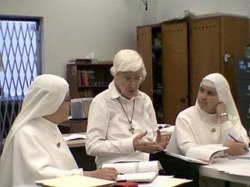
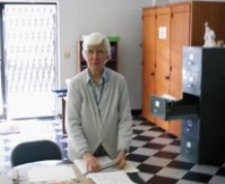
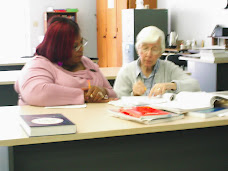
Here are some nice photos of a few of our students at SVDP-ALC and our volunteer tutor, Dr. Kathleen "Kathy"Dunlap, MD. Kathy, who volunteers her time at least twice per week, has been helping our school now for about a year. She is a retired medical doctor who has been a great help to our students. Next to her is Aaron Hawthorne, one of her students, who is with Louisiana Green Corps and ARC of Greater New Orleans (affiliated with AmeriCorps). Aaron has just completed a term of service with Green Corps, and he received a certificate for his fine accomplishments. In the other photo are student Jor'dan Watson who is pursuing his GED and Sr. Silvia Rodriguez who is a Catholic nun from Mexico. Sr. Silvia is with an order of nuns who are nurses. She is improving her English language skills while helping the sick and needy in New Orleans with the Sisters of the Servants of Mary.
-- Adrian

Sunday, September 28, 2008

Photos from South Pole Station -- John Miller, USAP


Here are some great photos from Antarctica from our USAP pen pal John Miller.
John is at the Amundsen-Scott South Pole Station. The photo of the people is of an OSHA 10 safety training class at South Pole Station. John is in the front row wearing the red Rex Sox baseball hat. The others in the photo are men and women of the US Antarctic Program at South Pole Station. They must train frequently for safety reasons in the extremely dangerous land of Antarctica.
Another photo is of the sunrise at South Pole. It is just beginning to come up down there, and we know they are happy to have the sun back once again. It stays totally dark for about 6 months in the Antarctic "winter." Then the sun comes up and stays up for 6 months, but it always stays low on the horizon. Care must be taken to protect the eyes from "snow blindness," too much sun reflection.
The last photo is of "Old Glory. " The US flag is flying proudly next to a sign indicating the location of the actual South Pole.
Great stuff!! Thanks again, John
-- Adrian

The Tent: A John Miller Photo from South Pole, Antarctica


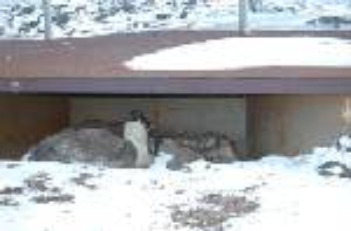
Our USAP pen pal John Miller sent us this striking photo of the famous tent from Antarctica. It is an exact replica of the tent used in 1912 by the Norwegian explorer Roald Amundsen; he left this tent and an note inside as evidence that he was the first human being to reach the South Pole. Later the English explorer Robert Falcon Scott found the tent and stayed in it. But Scott and his team perished on the Ice from starvation and extreme cold.
The actual Amundsen-Scott tent, the USAP believes, is still at the South Pole somewhere, hidden under the ice. No one has found it yet. But some of the members of the US Antarctic Program have set up the replica (see photo) and John Miller might attempt to re-create history soon by spending a night in the tent.
Wow! What an amazing story!
Here is some of what John Miller wrote to us about the tent: " I’m hoping to go out to [the] old pole in the next couple of weeks now that the sun is up. I also am hoping to bite the bullet and spend the night in the Amundsen/Scott tent that is set up next to the geographic marker. Unfortunately my camcorder broke so I will have to rely on still photos for both."
In addition to the extreme cold, John points out another South Pole phenomenon and danger: "I spent three hours outside clearing snow from our summer shop Saturday morning, the sun was up and barely showing through some clouds; winds were about 15 knots which meant a wind chill of about -110, and I was actually very comfortable, being protected from the wind behind the shop, where the temperature was around -70. I didn’t think I really worked that hard until the next day when I woke up very sore from head to toe. And I work out 4 times a week.
Lately I have really begun to notice the effect that living at altitude will have on your short term memory. If I am on a ladder and I take a measurement for something, I will forget what it was by the time I climb down unless I write it down. I can walk across the room to get something and forget what it was in the few seconds it takes to get where I was going. Very frustrating."
We can only imagine how difficult it is being at the South Pole. But it is very rewarding for science, and the men and women of the USAP are really serving America well. Our hats go off to all the brave men and women of the United States Antarctic Program from our SVDP-ALC school in New Orleans.
Incidently, I also discussed our Antarctica pen pal program in an article which was just published in September in the literacy magazine called the Change Agent from Boston, Massachusetts. The article is about climate change (which is one of the subjects studied at South Pole) and is called "Lakeview, New Orleans, Antarctica, Our Earth." The link to Change Agent is on our links column at left on this blog.
Finally, John wished us all well after our recent experiences and evacuations with Hurricane Gustav. He wrote: "I hope and pray that all my friends in New Orleans are back at home and safe from any more of this season's hurricanes."
Thanks again, John and all our friends in Antarctica, for the well wishes and the great Antarctica updates.
-- Adrian

Friday, September 19, 2008

Remember Katrina: Fred Swaim, The Socrates of Loyola University


(Below is another in our SVDP-ALC blog series on "Remember: Hurricane Katrina." As you recall this series was interrupted by the appearance of Hurricane Gustav near August 29th this year, Katrina's anniversary, and then again by Hurricane Ike. We will, however, continue with more Katrina stories and more Katrina people until our story is told.
-- Adrian)


"For sudden the worst turns the best to the brave."
From Prospice by Robert Browning

It was Ernest Shackleton who was fond of this quote (above) from Browning's poem about death and life and courage -- Prospice (pronounced from the Latin as pro-spee'--kay, meaning looking forward). Shackleton was a man who should feel right at home on this blog. He was the Anglo-Irish Antarctic explorer who tried to cross the frozen continent via the South Pole. He became shipwrecked with his crew when his famous ship, "The Endurance", got stuck in the ice at the Weddell Sea. "The Endurance" was finally crushed and sunk in the shifting ice of Antarctica. Shackleton, however, did not desert his crew or give up hope. He abandoned his original goal of being the first to transverse Antarctica via the Pole for a much higher purpose: to save the very lives of his crew and himself. He used Browning's poem and that very line (above) to inspire his crew and keep them alive. The "worst" situation had fallen to them. But "the best" would occur suddenly as they shifted their goals in life from vainglorious glory to sheer survival and self-sacrifice to save their own lives and the lives of each other in the crew. Shackleton did eventually save every man in his crew in an incredible adventure -- by sailing in nearly frozen seas with some of his crew in a wooden life boat to get help and return for the rest of his crew.

This amazing story of Antarctica, among other things, inspired me to begin our school's pen pal program with the the U.S. Antarctic Program (USAP). In addition to geography lessons and other studies for basic education, Antarctica teaches us about struggle, death, and life.

But to us who read this blog, Antarctica is also linked now --oddly enough --to New Orleans and thus to Hurricane Katrina. In an unpredictable and seemingly impossible way, a set of characters have crossed paths right here on our blog. Shackleton's struggle -- and the very name of his ship "The Endurance" -- is relevant to our story of Katrina. We have seen on our blog other Katrina people -- the students from the St. Vincent de Paul - ALC school and their pen pals who are members of the USAP stationed at McMurdo and the Amundsen-Scott South Pole Station. You, dear reader, have read about Miss Kitty, the post-Katrina cat, who was a good friend of mine during my own Katrina "displacement. (See the post on Aug. 2nd.) You read about hurricanes and rumors of hurricanes besides Katrina like Hurricane Rita and Hurricane Gustav which drove all the citizens of New Orleans into evacuation, once again, from their wounded and vulnerable city. And you read about Hurricane Ike which just missed us last week and hit Houston instead and destroyed much of Galveston.

Now you will meet another Katrina person -- who was (and still is in spirit) the most outrageous of them all. (See his photo above.) He was a lawyer, but he did not act like a lawyer. He was a law professor, but he did not act like a law professor. He was the author of a book on law, but he did not act like the author of a book on law. He had a law degree from Tulane and a masters degree in law from U.C. Berkeley, but he certainly did not act like he was from Berkeley. (He went to De la Salle too and spent his youth in MidCity, a true New Orleanian.)

How did he act, you may ask? Well, he took Shakespeare's advice: All the world was his stage. He acted like he was Jimmy Cagney. He acted like he was Marlon Brando in "The Wild Bunch" (Question: "What are you rebelling against?" Answer: "What have you got?") He acted like Peter Falk in Columbo, a program he once watched religiously. He rode a motorcycle at one point while teaching law at Loyola Law School in New Orleans despite the fact that he suffered most of his life from polio.

He had a fast wit and would take jabs at people, but it was just in fun. He once ran --or attempted to run -- an ill-fated campaign for governor of Louisiana. After watching countless re-runs of "Raiders of the Lost Ark," he came to believe that he was Indiana Jones. But as evidence that he was not totally delusional, he quite sanely called himself instead merely "Louisiana Swaim."

"Louisiana Swaim for Governor!" Yes, I can still recall the rallying cry. Alas, that was the campaigm that never materialized, although his law students were ready to carry on with the campaign. He taught law at Loyola Law School for about 30 years, from the early 1970's until the hedious days of Hurricane Katrina.

Despite his deteriorating health -- again due to post-polio syndrome-- he tried to continue to teach. He never claimed to be like Socrates -- that was not one of his Walter Mitty roles on his stage of life. But, yes, I think he was like Socrates. (The wise man knows how much he does not know and challenges those who think they know everything.) While your basic Corporations or Real Estate Law professor would be aghast to show up in class wearing the wrong color tie or an inappropriate business suit, Fred -- I mean Louisiana Swaim-- would wear a Hawaiian Luau shirt. He might show up in winter time wearing his motorcycle jacket, who knows? (Again... Q: "What are you rebelling against? A: What have you got.)

But it was not all craziness. No. Mainly I remember the books. Lots and lots and lots of books. He had accumulated, well, it must have been in the thousands. He read all the time. And not just things that he taught like law, which, of course, he read. But subjects of every type, it seemed. Books on philosophy. Books on drama and movies and psychology. Books on history, especially on World War 2. Books on science fiction. (We, of course, ofter discussed the "truth" behind the Roswell Incident, you know, where the flying saucers crashed landed in New Mexico in 1947? Yep, he knew "the truth" about UFOs too.) He read books about the Kennedy Assassination and even got an autographed copy of Jim Garrison's book on the subject -- which he subsequently gave to me.


Fred had one wife and three children, one sister, and parents who pasted away many years ago. (I remember Fred's father once told me that he, the father, once sat on the Outlaw Jessee James' knee once when he was a child. I wonder if that was true?) Fred had acquired polio in the 1950's in New Orleans during what was a period of epidemic. But instead of letting this destroy himself, he found other goals in life. So, rather than crossing Antarctica via the South Pole (or the New Orleans equivalent of this), he concentrated on saving the only life he had and the equivalent of the lives of his crew, which were the people who came into his life, his family, his friends, and his students -- or at least helping them as best he could. And throughtout his life he continued to read. Lots and lots and lots of books.

I still recall seeing his room at his parents' house many years ago. He had his large bookshelf right next to his bed where he could reach books right off the shelf from a proper lying/reading position. I realized then this was a brilliant idea, and I have always tried to duplicate this in my life (although in post-Katrina living it has been a challenge.)

He liked boiled crabs, New Orleans seafood, beer, and above all my sister's homecooking. (My sister Mary Ann and Fred were married more than 30 years ago at Holy Name Church at Loyola University).

He was at one point my Admiralty professor. He was my-brother-in-law. And he was my friend.

The Hell that was Hurricane Katrina -- the nightmare that was the evacuation from both that storm and also Hurricane Rita -- eventually was too much. (He and my sister had to evacuate twice -- from New Orleans to Lafayette for Katrina, then from Lafayette to Mississippi to stay at the home of the parents of my brother-in-law Chris. (Chris had helped our family multiple times during and since Katrina. He also has helped our SVDP-ALC school on many occasions behind the scenes. It was Chris and Marci, my sister, who "owned" Miss Kitty by the way, the Katrina Cat who is mentioned in another Katrina story on this blog. See Aug. 2nd post.)

It is very difficult to remember those days of Hurricane Katrina without breaking down. What words can we use to describe the whole ordeal? Nightmare? Horror? Unbelievable? I just don't know anymore. You tell me.

Fred -- his real name was Frederick, by the way, but I never called him that-- passed several months after my mother passed who also went through Hurricane Katrina. He did not go without a fight, however. He once loved to follow boxing, and even punched a punching bag as a youth -- despite having polio... or maybe because of it?


People might not always be able to overcome the insurmountable, but some people still try. I recall my sister Mary Ann discussing how they watched and enjoyed a film about FDR with Kenneth Branagh, the Irish actor who also played -- oddly enough-- Ernest Shackleton in a biographical film. Franklin D. Roosevelt, of course, was stricken with polio. We who do not have that illness, or a similar sickness, cannot really understand what it does to people both physically and psychologically. But it is amazing what some people can accomplish despite these afflictions.

Fred, who was once an English literature major, was fond of the poems of Dylan Thomas. I will not tell you when it was the last time Fred heard this poem read out loud; but I will tell you that it was after Hurricane Katrina, and it had a special importance.

So, I will repeat that poem below. Please read it. Perhaps it will have a special meaning for your own life or the life of a loved one some day.


"Do Not Go Gentle Into That Good Night"
By Dylan Thomas


Do not go gentle into that good night
Old age should burn and rave at close of day;
Rage, rage against the dying of the light.

Though wise men at their end know dark is right,
Because their words had forked no lightning
they do not go gentle into that good night.

Good men, the last wave by, crying how bright
Their frail deeds might have danced in a green bay
Rage, rage against the dying of the light.

Wild men who caught and sang the sun in flight
And learn, too late, they grieved it on its way
Do not go gentle into that good night.

Grave men, near death, who see with blinding sight
Blind eyes could blaze like meteors and be gay
Rage, rage against the dying of the light.

And you, my father, there on the sad height
Curse, bless me now with your fierce tears, I pray.
Do not go gentle into that good night.
Rage, rage against the dying of the light.


Fred did not go gentle into the night.
He was still outrageous and courageous to the end.
The worst turned the best to the brave.

And we will all meet again.

-- Adrian

Sunday, September 14, 2008

Houston

I was watching some of the Hurricane Ike coverage online from the stream at KHOU TV, and I just could not stand it anymore. It brings back the memory of Katrina. Hurricane Katrina was in a category by itself, of course; but Ike should tell us something else. It should be a warning about our future. Climate change is real. We are in danger and have been in danger and will be in danger for many years to come. Unless we take this issue seriously, and deal with it responsibly, we are all doomed. Our cities on the Gulf Coast and East Coast will be jeopardy of destruction by winds and floods.

While I write this tens of thousands of people in Houston and Galveston and all the way to Louisiana are suffering. Furthermore, many more people in south Louisiana are suffering from Hurricane Gustav. Furthermore, we are STILL suffering a painfully slow recovery in New Orleans and Louisiana from Katrina and Rita.

So... I will re-print the same list of hurricane relief charities I listed the other day. If you can help, please do so. Tell your friends as well. I will keep repeating this list over the coming days and weeks. Thanks.
-- Adrian

Here are some links to charitable organizations which deal with Hurricane Relief. There are many other relief agancies, of course, but this list is a good start. Contact one of these if you want to help the victims of the hurricanes, or contact your local Church or Synagogue or community civic organization. There are many ways to help those affected by these recent storms. Thank you for helping.-- Adrian

The American Red Cross http://www.redcross.org/
The Salvation Army http://www.salvationarmyusa.org/
Catholic Charities http://www.catholiccharitiesusa.org/NetCommunity/Page.aspx?pid=193
Catholic Charities Archdicese New Orleans http://www.catholiccharities-no.org/
Catholic Charities Galveston Houston http://www.catholiccharities.org/
St. Vincent de Paul Society (National Center) http://www.svdpusa.org/
AmeriCorps http://www.americorps.org/about/donations/index.asp

Saturday, September 13, 2008

The Sign on Our Front Door


Here is a photo of our painted sign on our front door of our school. The door survived Hurricane Gustav and gusts from Hurricane Ike in just the past few days.
Doesn't it look great!
-- Adrian

The Antarctica Bulletin Board at SVDP-ALC

We are constantly adding new photos and emails from our pen pals at the Amundsen-Scott South Pole Station and McMurdo Station to our bulletin board at the school. Students and visitors can see these on display at all times. Visitors are usually astonished at this display, and everyone loves it!

The only news not directly from Antarctica on the bulletin board is the set of the baby photos of Gibson with Sarah and Owyn. These photos have a special dispensation due to their overwhelming popularity (I emailed a copy of these to Antarctica), plus Baby Gibson appears to be dressed properly for Antarctica with his blanket and matching little hat. He looks ready to go to South Pole Station and live on the Ice. (Gibson is wearing his Antarctic gear in the fuzzy photo -- top row, 2nd from the left.)

We try to put up a photo or email from each of our pen pals who write to us -- John Miller, Calee Allen, Weeks Heist, Shandra Cordovano, Leah Webster, Jason McDonald and Lisa Welfare. Lisa and Shandra are at McMurdo; John, Calee, Weeks, Leah, and Jason are at South Pole -- although some are leaving the Ice soon for home.

Occasionally we rotate photos when the board gets too filled. Also, that lets people see new photos and letters as they come in.
-- Adrian

Hurricane Relief -- Links

Here are some links to charitable organizations which deal with Hurricane Relief. There are many other relief agancies, of course, but this list is a good start. Contact one of these if you want to help the victims of the hurricanes, or contact your local Church or Synagogue or community civic organization. There are many ways to help those affected by these recent storms. Thank you for helping.
-- Adrian

The American Red Cross
http://www.redcross.org/

The Salvation Army
http://www.salvationarmyusa.org/

Catholic Charities
http://www.catholiccharitiesusa.org/NetCommunity/Page.aspx?pid=193

Catholic Charities Archdicese New Orleans
http://www.catholiccharities-no.org/

Catholic Charities Galveston Houston
http://www.catholiccharities.org/

St. Vincent de Paul Society (National Center)
http://www.svdpusa.org/

AmeriCorps
http://www.americorps.org/about/donations/index.asp

Friday, September 12, 2008

Hurricane Ike -- NOAA Satellite Photo


As you can see from this satellite photo from NOAA (see www.ssd.noaa.gov), the hurricane is on the brink of hitting Texas near Houston. But its winds and rain and storm surge are also hitting some of Louisiana.
For the past three years New Orleans has been living on the edge with the threat of hurricanes and tropical storms.
What could happen very soon in Galveston and Houston could be another major national tragedy.
Although this SVDP-ALC blog is mainly about literacy education and related issues of social justice, we find that now we must cover the weather too because the weather during hurricane season in New Orleans is now an issue of life and death.
-- Adrian

Hurricane Ike's Wind Field


Another day, another hurricane. Hurricane Ike is marching towards Houston and Galveston, Texas and will probably do serious damage there.
New Orleans is, as I write this, in the wind field of Hurricane Ike. We are on the right front quadrant, the worst side, of the storm; but we are 200 miles from the eye. Still, we are getting heavy rains and winds and some tropical storm gusts today from the feeder bands.
See the map at left from the internet from NOAA -- www.nhc.noaa.gov
Incidently, our pen pals at South Pole Station are also affiliated with NOAA in that NOAA (National Oceanographic and Atmospheric Administration) has various weather stations and equipment at the Pole. Much like NASA, NOAA relies on scientific help from the USAP at the Amundsen-Scott South Pole Station. We are fortunate in New Orleans that Ike did not come any closer. We are still recovering from Katrina. And Hurricane Gustav just hit near here last week. Some in our area were also affected by Hurricane Rita.
All indications are that Houston, Galveston, and the Texas coast will be hit hard; so, if you are able, please help those people anyway you can. Contact an appropriate relief agency -- such as the American Red Cross or Catholic Charities, etc. -- and support them if you can. In the alternative ask your local Church or civic association if they will help the victims of Hurricane Ike. It does really look bad, and just as other Americans needed help after 9/11 and Hurricane Katrina, it looks like tremendous damage will occur in the Houston area very soon.
-- Adrian

Thursday, September 11, 2008

September 11, 2001 and New Orleans

Today is September 11th. It is seven years since the Twin Towers in New York City were attacked, the Pentagon was attack, and many Americans died in combat with terrorists in a jetliner that eventually crashed into an open field in Pennsylvania. That was a day of horror. It was our generation's December 7th, our Pearl Harbor Day.

Much has happened since that terrible day. Our nation is still at war with terrorists, and we in New Orleans faced another day we will never forget -- August 29th, 2005, the day Hurricane Katrina struck.

Some have tried to compare September 11th and Hurricane Katrina. There are major differences, but there are similarities too. 9/11 was an attack on our nation by a foreign enemy. Katrina was a destructive act of nature combined with a breached levee system. But the similarities are that two major and unique American cities were severely harmed and thousands of Americans died, many more were injured physically and psychologically.

Perhaps the most important similarity is that despite the horror and destruction, other ordinary Americans around the county came to the aid of the wounded cities and their people in that time of desperate need. We were all united on those two horrible days -- September 11th, 2001 and August 29th, 2005 -- united much in the same way as an earlier generation of Americans was instantly united on that day of infamy on December 7th, 1941.

Something good could come from these horrible days, in the end -- a sense of solidarity and a profound and heart-felt compassion for one another as fellow Americans in need.

-- Adrian

Hurricane Ike -- Satellite Photo From NOAA


At left is a photo from NOAA (National Oceanographic and Atmospheric Administration) taken from the internet which shows Hurricane Ike heading west past the Louisiana coast to Texas.
New Orleans is on the right front quadrant, the worst part of the storm, so we will get winds and rain all day. But the hurricane is far enough away not to do major damage here.
However, the situation looks bad for the Texas coast and Galveston, Houston, or Corpus Christi. We hope everyone stays safe.
-- Adrian

Wednesday, September 10, 2008

Telescope and Aurora at the South Pole


Our pen pal John Miller sent us this awesome photograph of the telescope used at the South Pole with the Aurora Australis in the background.

It must be a stunning sight to behold in person. Scientists can make astronomical studies at the South Pole that they cannot make anywhere else on Earth because of the nature of the sky, the atmosphere, and the location.

Scientists at the Pole are studying a number of topics including climate change and even the Big Bang theory and the origins of the Universe. Antarctica is a fascinating place indeed.
-- Adrian

Amundsen's Tent Exact Replica -- Antarctica


Our pen pal in the USAP John Miller sent us this photo from South Pole Station; the full official name of the United States base at the Pole is Amundsen-Scott South Pole Station.
Roald Amundsen, a Norwegian explorer, was the first human to reach the South Pole. He and his team, which made the trek to Antarctica in 1911-12, stayed in a portable tent there and left a note indicating, for whom ever came later, that Amundsen was there first. The English explorer Scott and his team came later, found the tent, reached the Pole, but died of starvation and the extreme cold on the return trip.
That tent remained at the South Pole since 1912. The tent is still there somewhere in the South Pole vicinity, but it is hidden under the ice. The tent in the photo is an exact replica of Amundsen's tent which is in the care of the USAP. If you look closely at this photo which John Miller sent us, you can see the actual pyramid-shaped tent.
One of our students, Jennie Gorden, was reading about this tent and Amundsen today in school and was fascinated by them. Some of the USAP crew, including John Miller, might attempt to spend a night in the replica of Amundsen's tent to re-create history soon. John promised to update us about this event should it occur.
Also of note in the photo is that the sun is beginning to rise. It rises once per year at the South Pole, and that process takes a long time. The sun never rises high on the horizon but always low. This begins the Antarctic "summer" which is our wintertime. There are only two seasons in Antarctica, as I was told by one of our pen pals -- cold and colder. The Winter is colder, the summer is cold. So, soon the sun will rise, and it will merely be cold at the South Pole.

Also of note, the square building in the photo behind the tent is a weather station for NOAA -- National Oceanographic and Atmospheric Administration.
NOAA, like NASA, often works in conjunction with South Pole Station.
-- Adrian

Tuesday, September 9, 2008

The Hurricane Katrina Memorial in New Orleans


This is a photo I took recently of the still unfinished Hurricane Katrina Memorial in New Orleans; it is located at the Canal Cemeteries near St. Patrick's Cemetery Number 1. (Read more about the memorial in the post below.)

It is a beautiful place, a place of peace to help us remember the dead and all of us who suffered -- and still suffer-- from the affects of the worst natural disaster in American history, Hurricane Katrina.
-- Adrian

Hurricane Katrina Memorial at Canal Cemeteries New Orleans


Here is a photo I took of the new and still unfinished Hurricane Katrina Memorial which is located at the Canal Cemeteries in New Orleans. To find it, go to the Charity Hospital Cemetery which is near "Potter's Field" which is near St. Patrick's Cemetery Number 1 on Canal Street at the end of the streetcar line.

The memorial is a beautiful tribute to the dead of Katrina. Two main things will be at the memorial eventually -- a memorial site (which reminds me somewhat of the famous Vietnam War Wall in Washington DC) and also a burial ground for the actual remains of the dead from Hurricane Katrina who were still unidentified. I will try to add more photos as the memorial is developed.
To those who lost loved-ones in the storm, after the storm, because of the storm, or who were brutally affected by the storm, this memorial is a place of peace and remembrance which may help alleviate the emotional anguish of Katrina.
-- Adrian

Monday, September 8, 2008

Interactive Map of the New Orleans Flood in Hurricane Katrina


Above is a link to an interactive map from http://www.nola.com/
(Times-Picayune newspaper in New Orleans).
It shows step by step how the city flooded in Hurricane Katrina on August 29, 2005. It is frightening to watch, but it is a very excellent source of information.
-- Adrian

Sunday, September 7, 2008

Hurricane Ike -- No Rest for the Weary


Well, the latest news on the latest hurricane this Sunday morning is that Hurricane Ike will probably go over Cuba, weaken some, then enter the Gulf of Mexico, strengthen some, then head towards New Orleans ... but a high pressure system will block it somewhat and turn it towards the west.
It might then parallel the Louisiana coast and go to Texas. Well, who knows??? (See the map from the National Hurricane Center NOAA at left from www.nhc.noaa.gov)
Anyway, we in New Orleans are very, very, very tired of all this. Just too many hurricanes and rumors of hurricanes. Life in post-Katrina New Orleans has been very hard and stressful for the past three years. Having to deal with an endless, nightmarish parade of destructive hurricanes does not help us. Whether they hit us or not, the anxiety and disruption they cause when ever the storms come on our radar is unimaginable. New Orleans is not a normal city. Most of it, but not all of it, lies below sea level. In some cases 8 to 10 feet or more below sea level. So, in order to survive, we need barrier islands at sea to act as windbreakers, marshlands or wetlands south of us to act as sponges to sop up the storm surge, and, of course, levees all around the city. Hurricane Katrina all but wiped out the barrier islands. The wetlands have been eroding over many years. And you saw what happened to the levees on CNN. So, unless we fix the barrier islands, the wetlands, and the levees, all we have left are prayers and luck to protect us.
-- Adrian

Saturday, September 6, 2008

Hurricane Gustav in Baton Rouge

Although I could not take a photo then, let me describe to you what I saw around Baton Rouge on our drive back to New Orleans after Hurricane Gustav. The first thing I saw were many large trees flat on the ground, torn out by the roots. Then there were freshly cut logs from trees all around the sides of streets. (This was four days after the storm, and people were cleaning up.) I saw that almost no one had electric power. In some cases, the strong winds had knocked down large trees; and they crashed right through homes, destroying them. People were milling about outside in the neighborhoods, on front porches, walking on sidewalks, sitting on front lawns. Debris and tree branches were every where on the ground.

It was said on the radio that Hurricane Gustav was the worst hurricane to ever hit Baton Rouge. It was not Katrina (but nothing else was); but for Baton Rouge, it was very bad. It is possible that the state capital will be without electric power for many days or even weeks. The storm went on to attack much of the rest of Louisiana as well. It was difficult to find gasoline, food, bottled water, and other supplies anywhere in the area. The heat and the humidity increased as we approached New Orleans on our re-entry to the city.
-- Adrian

Hurricane Gustav Evacuation


Here is the home where I stayed for my Hurricane Gustav evacuation (the lovely white house with the porch). It is the family farm house of Sr. Kathleen's family in the Louisiana countryside about 40 miles from Baton Rouge. The other, more rustic looking building is also on the farm grounds and is a very old building. Doesn't it look great!! Historians would love to see this. It is an old barn with a corncrib nearby (see post below for more info). My thanks again to Sr. Kathleen, Sr. Lory, Mal Bahlinger and the Bahlinger Family, and the nuns at St. Joseph Convent in Baton Rouge for helping me in my Hurricane Gustav evacuation.
-- Adrian

Gustav Evacuation


Here is a photo of my new hurricane-friend Mal Bahlinger, the nephew of Sr. Kathleen's. Mal (Malachy) maintained the farm where we stayed during Hurricane Gustav. The farm is about 40 miles northwest of Baton Rouge. We lost electric power on the night of the storm, and it stayed out the rest of the time. Mal is a great chef, however, and knew how to use those large cast iron Cajun pots and pans, so he fixed some really great Cajun dishes despite the lack of electricity. These photos of the rustic looking buildings are of a very antique barn and a "corncrib." The corncrib was a place to hold corn as feed for farm animals in olden days. The barn once held agricultural supplies and room for a mule (nowadays a tractor). The house we stayed in is a beautiful home made in the 19th century. Unfortunately, the nearby town lost electric power too, and the power is expected to be off for many weeks. Many large trees also fell down in the whole area. The temperature was not bad compared to the city heat, but the humidity from the storm was very strong. On the day we left for New Orleans, the sun was finally shining.
-- Adrian

Endless Hurricanes


Well, I just got back from my Hurricane Gustav evacuation; I stayed with a relative of Sr. Kathleen's at their family farm in the Louisiana country side northwest of Baton Rouge. I will post a couple of photos from this event on the blog soon. Sr. Lory and Sr. Kathleen are safe, and they will return to New Orleans probably this weekend.
At left we see a map from nhc.noaa.gov (National Hurricane Center at National Oceanographic and Atmospheric Administration). As you can see it tells us that New Orleans is in the 5-day "cone of uncertainty" for this latest hurricane.
I don't know how much more of this the people of New Orleans can stand. We were still recovering from Katrina. Then came Rita. The recovery continued, then came Gustav this week. Now comes -- perhaps next week-- Hurricane Ike. Hurricane Josephine is also at sea and approaching the Caribbean Sea from the Atlantic. Endless hurricanes...
-- Adrian

Saturday, August 30, 2008

Hurricane Gustav Approaching South Louisiana


At left is an internet, satellite photo of Hurricane Gustav from NASA/NOAA.
As I write this, the hurricane is approaching south-central Louisiana to the west of New Orleans.
We will be evacuating very shortly. Life in New Orleans was already very difficult post-Katrina; now it will be worse.
But we will carry on because we must.
-- Adrian

Remember Hurricane Katrina -- Aug. 29, 2005


At left is a satellite photo (from the internet) of Hurricane Katrina from NASA and NOAA, National Oceanographic and Atmospheric Administration. It shows the situation just as the hurricane was about to hit the New Orleans area.
That was three years ago yesterday, but today we live under the serious threat of another hurricane called Gustav.
It is becoming increasingly more difficult to live in post-Katrina New Orleans.
Yesterday Sr. Lory, Sr. Kathleen, and I attended a ceremony to remember those who died in the Lower 9th Ward in Katrina. We went to the Lower Nine. I had intended to also attend a ceremony for the burial of the remains of those unknown who died in the storm, but Hurricane Gustav preparations have prevented this.
Assuming we survive as a city after Gustav, I will visit the new grave site for the Unknown of Katrina which is near where I live in Lakeview by the Canal Cemeteries -- assuming Lakeview is still here after Gustav. I will let you know more about this on this blog, if possible.
-- Adrian

Friday, August 29, 2008

Remember Katrina: Hurricane Gustav Approaches

Here we are at the 3rd anniversary of Hurricane Katrina. As I write this, New Orleans is in a state of alarm over the new hurricane which threatens us called Hurricane Gustav. It is still uncertain where it will go and what it will do.

Sr. Lory, Sr. Kathleen, and I went to a memorial service at Jordan and North Galvez Streets this morning in the Lower 9th Ward in New Orleans for the victims of Hurricane Katrina. This was the site of one of the major levee breaches in the storm. This was a part of the Annual Katrina Commemoration March. A new plaque and square are there now, built by the City of New Orleans as a memorial; plus Louisiana National Guardmen were present today as an Honor Guard. Speeches and prayers were made.

We also saw some of the houses built by the Brad Pitt and Angelena Joillee project and the Musicians' Village by Harry Connick, Jr. Also, Habitat for Humanity has built several new homes there.
Many, if not most, of the houses in the Lower 9th Ward appear as they did just after the storm; there is no improvement. It is a sad sight to see.
And now we have to deal with Hurricane Gustav. It is a very hard thing to deal with.
--Adrian

Wednesday, August 27, 2008

Hurricane Gustav - "Once More into the Breach, Dear Friends"

My plans to remember Hurricane Katrina on this blog have been interrupted by the sudden appearance of Hurricane Gustav. As Henry V once said, "Once more into the breach, dear friends." Hurricane Gustav is presently in the Caribbean Sea near Haiti and possibly headed into the Gulf of Mexico and towards New Orleans. It is really too early to tell, but we will have to look back at Katrina perhaps next week instead... if New Orleans is still here next week. Yes, life in post-Katrina / pre-Gustav New Orleans is very stressful and uncertain.
-- Adrian

Sunday, August 24, 2008

Ring the Bells !! We have Good News!!


It's time to celebrate! (Yes, I know, I'm bragging now, but good news is so scare in post-Hurricane Katrina New Orleans that we need to enjoy it when we get it.) I have successfully completed my first year with AmeriCorps and got a certificate (see the story below). In recognition of this and my work at St. Vincent de Paul -- Adult Learning Center, I received a certificate of appreciation from the school as well -- officially signed by Sr. Lory herself. (See photo at left.)
It has been a great year, and I look forward to year two at SVDP-ALC and with Literacy*AmeriCorps New Orleans. My thanks to everyone who has helped make this day possible.
-- Adrian

Time to Celebrate!!


As the photo shows, I have just received my Certificate of National Service for AmeriCorps -- L*AC, Literacy*AmeriCorps New Orleans.
This is evidence of my completing one full year of teaching and tutoring with our AmeriCorps group. It was a great year, and there is plenty more where that came from. I am still with SVDP-ALC and will return again to L*AC in late September... and still be with SVDP-ALC then too.
Yes, it is something to celebrate and be thankful for. Our Literacy*AmeriCorps New Orleans group finished a few days ago with 17 of us getting certificates. Life in post-Katrina Greater New Orleans has been very, very difficult; but Literacy*AmeriCorps has helped to educate many, many students. And L*AC helped to make possible the first ever regional GED graduation held in Louisiana (held in May at Loyola University). Our group sent teachers/tutors out to eleven different service sites around Greater New Orleans to Delgado Community College, the Hispanic Apostolate, YMCA Educational Services, various programs at the New Orleans Public Library, Ochsner Hospital, NOPLAY, YEP, a host of others ... and, of course, to the St. Vincent de Paul -- Adult Learning Center where I taught and represented L*AC. Furthermore, L*AC helped out many times in our community in various service projects from participating in Earth Fest at Audubon Park, helping with the Literacy Alliance and One Book One New Orleans event supporting the Katrina-flooded 9th Ward and, of course, helping to fix the outside of a house severely damaged in Hurricane Katrina in Lakeview, where many houses were under 8 to 10 feet of toxic flood water.
Our L*AC group did a lot this year to help recovering New Orleans. My thanks to everyone who has helped make this possible.
-- Adrian

Sunday, August 17, 2008

Sunset and the Station -- a photo from Weeks Heist, USAP pen pal

Another great photo of the sunset over the South Pole Station in Antarctica sent to us from our school's pen pal, Weeks Heist, from his website. Notice that the sun always sits low on the horizon. In the photo you can see the Eleveated Station and the giant telescope used by the scientsts there. Also, note the guidelines at left designed to help people find their way in the ice field. (See Weeks' website for more info and photos: http://www.weeksjr.com/ Weeks permitted us to use this and other photos from his website to post to our blog. If you visit his site, you will see many wonderful photos of Antarctica. But please ask permission from Weeks first before using or re-posting these photos and be sure to credit Weeks for the photos if you use them, thanks.)
-- Adrian

Weeks Heist, USAP pen pal, at the South Pole


Here is a very fine photo from our pen pal Weeks Heist who lives and works at the Amundsen-Scott South Pole Station in Antarctica. He is standing in front of the new Elevated Station near a sign indicating where the actual South Pole is. (They stuck a pole in the ground there just like in the Bugs Bunny cartoons.) The U.S. flag flies nearby. What a great photo! Thanks, Weeks.
-- Adrian

Monday, August 11, 2008

Amundsen-Scott South Pole Station in "Summer"


Our school's pen pal Jason McDonald, who lives at the South Pole, sent us this cool photo of the Elevated Station.
If you notice the semi-circle of flags in front, you will also see a small pole in the middle of the circle. That is the actual "South Pole." That is where the geographic South Pole is. (They really did stick a pole in the ground there, just like in the Bugs Bunny cartoons.)
Right now it is still dark at the Pole, but the sun should return in late September. (See the other photo below which Jason also sent to get a different view of the area.) Jason and the other Antarctica pen pals have been helping to educate our students -- and our teachers too-- about life in Antarctica. All of our pen pals are with the U.S. Antarctic Program which is a part of the National Science Foundation. Jason is also an LSU Tigers fan since he is originally from Baton Rouge, Louisiana which is right up the road from New Orleans. Thanks for the cool photos, Jason -- Adrian

South Pole Station in Sunlight, From Jason McDonald USAP


Jason McDonald of the US Antarctic Program sent us this great photo of where he lives at the Amundsen-Scott South Pole Station in Antarctica. The photo was taken in the Antarctic "summer" which occurs in our winter months. It is still dark right now in Antarctica, but the sun should return in late September.
This photo is good because it helps us see both the new elevated station -- where everyone lives now-- and the old dome which is where people used to live but is now a supply base.
Jason was born in Baton Rouge, Louisiana, so he knows all about life in both exotic Antarctica and exotic New Orleans. Thanks for the photo, Jason! -- Adrian

Sunday, August 10, 2008

The Baby has Arrived !!


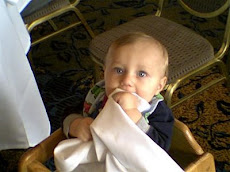
Meet the latest addition to Literacy*AmeriCorps: Gibson Fischer. He weighs 8 pounds, 3.2 ounces. He is 20 inches long. And like most New Orleanians, he is a Night Owl, having arrived in this world at about 3 AM on last Thursday.

His mom Sarah, our Literacy*AmeriCorps New Orleans director, and his dad Owyn are both doing just fine (see other photos below); and we at St. Vincent de Paul wish them well and every happiness!!

Welcome to New Orleans and the World, Gibson, from all of us at SVDP-ALC
-- Adrian

The Story of the Year for Literacy*AmeriCorps: Sarah and Baby


Literacy*AmeriCorps (L*AC) has a new family member -- Gibson. This beautiful photo is of Sarah Fischer, the director of L*AC in New Orleans, and her new baby, Gibson, who arrived just last week.
We at SVDP-ALC are thrilled by the new arrival and are very glad that mom, dad, and baby are healthy and doing just fine.
Congratulations, Sarah, from all of us at SVDP-ALC !!
-- Adrian

Baby Gibson and his Mom and Dad -- New Addition to Literacy*AmeriCorps Family


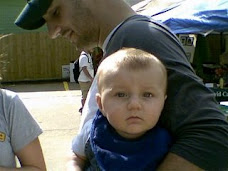
The wonderful photo (above) is of Baby Gibson and his dad, Owyn Fischer. Owyn is Sarah's husband; and Sarah is the director of Literacy*AmeriCorps New Orleans (L*AC).
Sarah and Gibson are in the second photo. Read much more about Sarah in our "Story of the Year 2008" article at http://svdpalc.blogspot.com/2008/08/story-of-year-for-literacyamericorps.html
L*AC works with SVDP-ALC to help educate adult learners in New Orleans.
Gibson just arrived last Thursday; and he is already wildly popular with the students, teachers, volunteers, and staff at SVDP-ALC. The photos of Baby Gibson, Owyn, and Sarah are now on our Antarctica Bulletin board too at the school!
Congratulations and Best Wishes
From all of us at SVDP-ALC!!
-- Adrian

Saturday, August 9, 2008

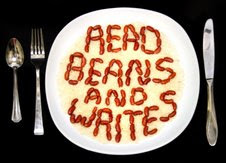
Miss Sharon's Jazzy New Orleans Red Beans and Rice Recipe

(In an effort to improve literacy skills, we at SVDP-ALC have decided to take advantage of one of the things Hurricane Katrina could not destroy -- our great food! So, we asked some of our students to write their recipes for great New Orleans dishes. Here is Sharon Kenney, a wonderful student at SVDP-ALC and her recipe for home-made New Orleans Red Beans and Rice. This is a very, very popular dish in the Crescent City; and it is traditionally served every Monday. Historically, Monday was wash day in New Orleans; and the beans would cook all day while the washing was done. Sharon's recipe jazzes up the dish with some extra flavors and spices.
-- Adrian)
New Orleans Red Beans and Rice Recipe
By Sharon Kenney
Red Beans and Rice is a really famous dish in Old New Orleans, and it really tastes great. It is healthy too.
List of Ingredients:
1. Smoked Sausage; 2. Ham cut in chunks; 3. Onions cut up, garlic, parsley; 4. Dry red beans.
Cook rice separatly, season to taste.
How to cook Red Beans:
1. Wash beans first, then throw away water.
2. Soak beans in new water for many hours, if possible. Then throw away water.
3. Onion, cook in a big pot with garlic and parsley.
4. Add beans and new water to cover beans, cook on low, stir.
5. Sausage and ham must be pre-cooked already. Cut them up and add to the beans, cook.
6. Add salt and pepper to taste while cooking. Add Louisiana-style hot sauce (or cayenne) to taste to individual plate after cooking, if you want.
7. Cook beans down for 2 and 1/2 hours or more, add water as needed, stir. Cook until soft and creamy. Cover pot while cooking.
How to Serve the Beans:
Serve over rice with French Bread or dinner rolls. Serve with lettuce and tomato salad with olive oil or mayonnaise. Pecan pie or apple pie are good for dessert.
(This sounds great, Sharon. I can't wait to try it. Gumbo, Red Beans and Rice, and Jambalaya are really the main three dishes in New Orleans especially to feed a large crowd for Mardi Gras gatherings at home, parties, or anytime really. -- Adrian)

Tuesday, August 5, 2008

Pop Quiz: Are these photos from Antarctica or New Orleans?


The Quiz Question is which of these photos come from Antarctica and which come from New Orleans?

The answer is that all come from the Amundsen-Scott South Pole Station in Antarctica EXCEPT the one photo of the street with the building with a "Spanish Lace" balcony. That one I took on Frenchmen Street in the Faubourg Marigny in New Orleans near the French Quarter.

Yes, these Polies look like they could make it big in the Big Easy with that great looking food and the proper Mardi Gras costume attire. Actually, the great looking cuisine comes courtesy of the lady in charge of the food supply at the Pole, Leah Webster. (That's Leah in the red dress.)

Polies celebrate various days and events at the Pole like Mid Winter, the Sun Rise and Sun Set, and other key days much as we do with Mardi Gras, St. Patrick's and St. Joseph's days, the French Quarter Festival, Jazz Fest, and others.

They don't have these fancy events all the time at the Pole, but we don't have a party everyday in New Orleans either. But "Personal Pizza Night" at the Pole looks really good to me as does the costume party for Sun Set Dinner. They also celebrate "hamburger dinner night" which we will discuss in another post later. Thanks again, Leah, for the great photos.
-- Adrianl

Monday, August 4, 2008

Alenander Solzhenitsyn Died in Moscow Today


(This is a "file photo" from the internet of Alexander Solzhenitsyn when he was a prisoner in the Gulag, the Soviet forced labor camp system.)
Note: We at the SVDP-ALC blog do not cover the news of the world. We leave that to other people. We cover news about our school and topics which relate to literacy education. However, an event of great significance has occurred today, sadly, which relates both to literacy and literature as well as to the issue of social justice -- which is a subject we are concerned with at our school and blog.

One of the greatest authors of our time has died -- Alexander Solzhenitsyn.

I first truly learned about this Nobel Prize winning writer when studying Russian literature at Loyola University in New Orleans with Professor Rochelle Ross (who was born in Russia, lived in Israel, became an American citizen, and taught at Loyola for many years). I was in many literature and language courses with Professor Ross, but two stand out in my mind: Justice in Russian Literature and Freedom in Russian Literature. Most of the skills I learned in language and literature, which I use today to teach my students at SVDP-ALC, I learned at Loyola from her. This included a study of the works of Solzhenitsyn.

Solzhenitsyn revealed to the world the terrible truth about the brutality of Communism, especially as it existed under Josef Stalin. Solzehnitsyn's book One Day in the Life of Ivan Denisovich brought him international acclaim not only as a great writer but as a moral thinker. Some have called him the conscience of Russia, and to a large extent, the conscience of the world. Like the character in his book, Solzhenitsyn himself was put into the Gulag (Soviet prison labor camp system) for being a political dissident.

Other works of his include The Gulag Archipelago, Cancer Ward, The First Circle, and others.
The SVDP-ALC blog takes note of this day in history, and in our geography class we will discuss this topic with our students further.

Solzhenitsyn once said: "Justice is conscience, not a personal conscience but the conscience of the whole of humanity. Those who clearly recognize the voice of their own conscience usually recognize also the voice of justice.”
May we all learn from his experiences and writings.
--Adrian

Sunday, August 3, 2008

The Moon at the South Pole, a John Miller photo


John Miller of the USAP sent us this incredible photo from the South Pole. (See photo at left.) It is of the Moon, strangely with the glow of a cross, over the ice near the Amundsen-Scott South Pole Station in Antarctica, which is where he is now with our other pen pals. You will note the flags as well. The sun is not shining there now but will return in later September.

Here is some of what John wrote to us:

"Hello everyone from the dark side of the world. Hope everyone is having a pleasant summer and enjoying sunshine and warm temperatures. We are heading into the last really dark days of winter with the passing of the moon which won’t come back for another two weeks, and then about two weeks past that the sun will begin to peek above the horizon once again with the solstice coming on September 21st.
I took some good pictures of the moon, which was almost full, that had rays shooting out of four sides in the shape of a cross. The sight of this cross was absolutely awe inspiring; pictures do not do the sight justice. If you look closely you can see a very faint aurora in the picture as well."


(Thanks again, John, for the amazing photo from Antarctica. -- Adrian)

Robert Burch, Ph. D. -- Guest Writer on Science

(We at SVDP-ALC are very happy to welcome our next guest writer, Robert Burch, Ph. D. If the name sounds familiar, that is because you read about his father at our blog at our July 19th post about World War 2. I first met Robert when we were students at Jesuit High in New Orleans, and we stayed in contact via mail and email over the years. He now lives up north with his wife Mary, who is also a Ph. D., and their children. He is still very interested in New Orleans and especially the state of education in post-Katrina New Orleans. He has been following our school's blog and has advised me many times on scientific aspects concerning our Antarctica project. After Jesuit, he went to college at Tulane University in New Orleans and then graduate school in chemistry at the University of California at Berkeley.
I asked Robert the following question: Why should someone want to study science? This is the key question for our students. And here is his reply.
-- Adrian)


The Wonders of Science
By Robert Burch, Ph. D.

Do you ever wonder what makes things tick? For example, why do seeds sprout? What causes your heart to beat? What is a rainbow? Why are the days longer in the summer than the winter? All of us have a natural sense of curiosity about the world around us to one degree or another. That’s the stuff of science. It’s the study of the natural and physical world around us, so that we can make it understandable.

I remember a special moment I had early in school. It was in science class, and the teacher taught us about simple machines. There are six of them – pulleys, levers, wedges, incline planes, wheel & axle, and screw. The teacher showed us that examples are all around us, both in manmade machines and in the natural world. It was an Aha! moment for me, because of two things the teacher did. She showed us that complicated machinery is often nothing more than a careful assembly of lots of simple machines. This meant for me that complicated things could be understood in simple terms. Once again, it was the stuff of science.

I remember her teaching us about “mechanical advantage”, which was using basic arithmetic to figure out how much benefit these simple machines could provide in carrying out a job. For me, this was an inkling that science could be used to advantage in real life situations in ways that we could precisely define before even doing the job. It meant that science not only satisfied my curiosity but could be made useful to make people’s lives better. You can call that the practical application of science, or “technology”.


The practical application of science translates into all sorts of arts and crafts and trades we do in the adult world. It’s the basis for things. For instance, if you are a boat welder, how do you know what kind of material to use to weld the joint or what temperature? It comes from science. If you are a painter, how do you know what kind of paint to use for a certain job? It depends on using the right scientific formulation for the conditions the paint is exposed to. If you are a health care worker, how do you know when you’ve provided sanitary conditions for your patients? You use the scientific knowledge you have of how and where germs grow. As a consumer, how do you know what consumer information to believe? You apply the basic science you learned to the consumer product and how you intend to use it.

The sense of wonder and the practical application of science in everyday life, those are the reasons to study science. I made a career out of science, but you don’t have to make it a career to get a lot of benefit out of studying science.


(Thanks, Robert, for helping our students better understand the importance of science. Yes, a knowledge of science is especially important in the technological world of today; and, as our Antarctica project has shown, science can be fascinating and fun to learn too. -- Adrian)

Saturday, August 2, 2008

Remember Katrina: Miss Kitty, the Post-Katrina Cat


Allow me to introduce you to a personal friend of mine who sadly passed away last year. Her name is Miss Kitty (see photo at left, wearing a red cat sweater for Christmas time). Miss Kitty and I became good friends while I was "a displaced person" in Hurricane Katrina. Miss Kitty belonged to my sister Marci and her husband Chris -- although I am sure that in Miss Kitty's mind she simply graciously allowed them to take care of her and open her cans of cat food and tuna fish. For quite some time Miss Kitty was my constant friend while I was in Virginia. I would talk to her and she would meow back; it was one of the most civilized and enlightening conversations I have ever had.
Miss Kitty was born in Bucktown (a fishing village/suburb of New Orleans), and pretty much lived the life of an alley cat until being rescued by my sister. While I had the opportunity to exist in her presence, I appointed her as Queen of the first ever Mardi Gras parade in Chatham, Virginia -- the Mystik Krewe of Miss Kitty. She was, of course, Queen Miss Kitty the First. Her royal theme song was "The Miss Kitty Mombo." (It was sung to the tune of "The Mardi Gras Mombo." For example: "Down in New Orleans, Where the Blues was born; It takes a cool CAT, to blow a horn ... The Miss Kitty Mombo, Mombo, Mombo, Down in New Orleans.")
This august Carnival Krewe consisted of precisely myself and Miss Kitty. However, despite the painfully low attendance for her first parade, I do believe Her Royal Majesty was pleased, especially by the Royal Banquet afterwards which consisted of canned tuna fish. Because of this success, I also appointed her as the Irish Princess for the first (unofficial) St. Patrick's Day Parade in that small Virginia town too.
In classic New Orleans Irish Channel style, Princess Miss Kitty the First helped toss out green cabbages to the crowd -- which, as in the Mardi Gras parade earlier, consisted only of myself and the Princess. Miss Kitty did not care for cold climates and eventually returned to hot and humid New Orleans for one last time before the cat diseases of old age took her away from us.
Miss Kitty lives on as a constant memory of a true cat friend who helped me endure what can only be termed as the nightmare of Hurricane Katrina. Cats and dogs and other animal companions really are important in our lives, and they help us humans endure the struggles of life, be they great or small, or catastrophic like Hurricane Katrina. So, we owe the animals a lot. Here's to you, Miss Kitty.
-- Adrian
(Note: We will soon be posting many more Katrina Stories from our students on this blog, so stay tuned.)