Wednesday, May 27, 2009

Scott Base, Antarctica -- New Zealand Base Near McMurdo


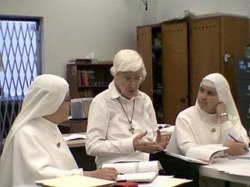
John Miller, our USAP pen pal, visited the base run by New Zealnad which is near the American base called McMurdo. The New Zealand Base is called Scott Base (not to be confused with the American base called Amundsen-Scott South Pole Station we learned so much about last year). John was invited to dinner by his 26 New Zealand friends, and he sent us some groovy photos. How nice to have good neighbors even in Antarctica!
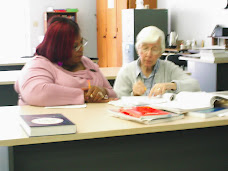
The photos John sent show a mixture of old and new things. The old Scott Base goes back to IGY which was the International Geophysical Year of 1957. In the photos, an old building and its interior are from that period. A newer base exists now and, as you see, has nicely well-lit meeting rooms (John's New Zealand friends are at the table), a library (notice the book that's named Antarctica), and bunks. It also has a lounge with a window that overlooks the Ross Ice Shelf towards McMurdo.
--Adrian

Below are comments that John emailed to us from McMurdo:

"I had the pleasure of being invited to dinner by my Kiwi friends from Scott base last Wednesday evening.
Afterwards I was given a brief tour of their base and its history dating back to the first IGY in 1957. I have included some pictures here ... They have a really nice lounge that looks out over the Ross ice shelf, and down to the original base built in 1957, in part by Sir Edmund Hillary...who was the Leader of the 1957 over-wintering party at the base.
. It is very much the same as it was back in 57', with a plethora of old pictures and artifacts from those early years. While much smaller than our Mcmurdo, Scott base has many of the same amenities including a bar, store, sauna, vehicle maintenance facility, library, movie room, computer room, and dorm style living quarters. Altogether, a very cozy place to spend the winter for the 26 Kiwi's doing so this year.
One of the many events that some dare to do here is the Polar Plunge. This is where a hole is cut in the sea ice and people warm up in the sauna, then run out and jump in to the Ross sea through the ice. Typically done at sunset, midwinter, and sunrise, with the air temp usually below zero, and the water temp around 20'. I understand it is quite a shock..
... ... ...

We still have a couple hours of daylight here in the afternoon, and will be totally dark in a couple of weeks. Auroras have been spotted in the early morning hours, but you need to get away from the town lights for the best view. One of my goals this winter is to get some aurora shots of my own either from Observation hill, out on the ice shelf, or from the castle rock area, if I can get someone to go with me.
Well, that's it for now, keep those emails coming ...
Take care,
John

Tuesday, May 26, 2009

"On the Ice" at McMurdo -- Photos of John Miller


(Here are two more stunning photos sent to us from Antarctica by our pen pal John Miller.
--Adrian)

Pegasus Crash, 1970 -- McMurdo, Antarctica


(John Miller recently visited the site where a US plane crashed in Antarctica many years ago. Here are some of his photos and what he wrote to us about it.
--Adrian)

Date: Friday, March 20, 2009, 4:02 AM A quick note to show everyone some pictures of the Pegasus crash site which we visited this evening. Weather was calm and the sunset was spectacular. Pictures really do not tell the story of just how beautiful this place really is.
John
"In October 1970, a C-121J super constellation called "Pegasus" crashed into an airfield near Mcmurdo. A storm had blown in from the south, as they're known to do, and completely eliminated visibility. The flight had already passed PSR (point of safe return), therefore lacked fuel to turn around and was left with no choice but to 'put the girl down.' After circling the runway for hours without getting a visual, they caught a quick glimpse on the last pass and set 'er down, sliding into a heavy snowdrift caused by the storm and spinned the connie around while flinging off a couple propellers, a couple engines, and the entire right wing. Nobody died."

Our Student Questions to Antarctica


Recently a few of our students had questions about life in Antarctica. Here are some of the student questions and answers from our pen pal John Miller, USAP, at McMurdo Station, Antarctica. In the photos we see John inside the McMurdo Station at work -- with electricity-- and outside "on the Ice." (Note: John was also in Afghanistan working with the US government recently and discusses that too. )
--Adrian

Dwana: "I am a Christian pastor in training and I know that you once did religious services at South Pole. I think it is very important for people to know about God. I would like to bless you and your family and the people who work with you, who are your family now until you return home. God Bless and keep you safe."
John:
Dwana, I am blessed to be able to offer a church service here at Mcmurdo as well, and having a number of people attend from our base and Scott base as well. I am looking forward to our Easter service next week, even if it will be dark. I'm praying for a full house for that service and the opportunity to share the true meaning of Easter with everyone, and offering the Lord's supper as well.

Thank you for your blessing and please remember my wife especially. She works so hard to keep our household running, feeding the kids, and working at a full time job as well. Truly I am, as Proverbs 18:22 says "He who finds a wife finds what is good and receives favor from the Lord".
Take care and fight the good fight!
John

Eliria:
"Do you have people who live out there besides yourselves, like the Eskimoes? Did you name the penguin in the picture? How do you all stay dry? Do you wash clothes there? Do you go fishing? We had a great International Women's Day educational gathering at school, and I talked about Education of Women in Afgahanistan. I heard about your visit to Afghanistan. Can you tell me more about it? What was it like for women's rights there when you were in Afghanistan? Thank you. I wish you well."


Eliria, well there are only us visitors here on the continent, no indigenous people. The Maori migrated to the islands of New Zealand about 1000 years ago and not much further south. This is a very harsh continent with little wildlife for sustenance, no soil for growing crops, which would be impossible anyway because of the cold temperatures, and sea ice that may, or may not, break up during the summer months. Ross bay is literally teeming with life, but is also covered with many feet of ice, even in the summer months. Whales, seals, and penguin, are found here in abundance during the summer, but one would have to venture out onto the ice, which can become very unstable, to hunt them. Even the native birds, like the Skua, Antarctic Turn, or Snow Petrel, leave for the winter.
I really wish I could go fishing here but the ice is too thick, and it is not allowed under the current Antarctica treaty.
I was in Afghanistan for about six weeks back in 2005, while working as a government contractor on a base just south of Kabul. I met quite a few local Afghans who were really no different from me aside from their being Muslim. They lived under some of the worst conditions in the world and never complained. I was honored that, the day before I left, they asked me to share a meal with them. They have so little compared to us and yet they wanted to share with me.
I only saw women when we traveled to Kabul, or other camps, which was very dangerous at the time. Most women wore western style clothes but did cover their faces with a veil of one kind or another. I was told by one of the locals that only the wives of the Taliban fighters would wear a burka, and they were few and far between.
Thank you for your interest and questions,
John

Jennie:
"I am sorry that you had to leave your family so soon, to return to Antarctica. We were looking forward to you to visit our school one day. But I'm happy to hear from you again via the internet. I wish you well. Be safe"
Hello Jennie, I'm trying to put together a vacation for me and my family, that would include a stopover in New Orleans, some time next December. I look forward to the day when I can visit your school and meet everyone and share more about my time at the South Pole and here at Mcmurdo.
I do miss my family terribly, but work is work, and there was precious little of it in Nevada. I don't think I could do this if my kids were not all teenagers, or in college. But, this does give me the opportunity to experience a part of the world I could not afford to see otherwise, and has brought me new friends from all over the United States.
Thank you so much for your concern,
John

The Frozen House -- McMurdo, Antarctica


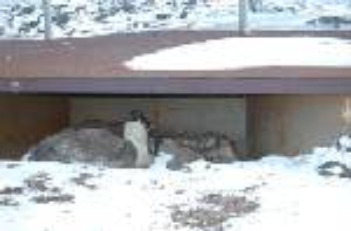
Here are two more spectacular photos sent to us from McMurdo Station, Antarctica by our pen pal in the USAP, John Miller. As John told us via email, this small hut in Antarctica had its windows broken in a storm, and it rapidly filled up with snow and ice. John dropped by later on to see what happened. That's him taking a break on the frozen sofa.
In the next photo we see what the visibility conditions are like in the Antarctic winter -- it's basically zero. Again, thanks, John, for the fantastic photos! I showed these to our students and teachers today at school, and they were amazed.
--Adrian

Below are John's own words in his email:
"Here are a few pictures of what this place looks like after two weeks of snow falling and 80mph winds. All told we received around 6 feet of snow ... Some places are scoured clean, while others have 10 foot drifts.
One of the buildings had a couple of windows broken out from blowing debris and which allowed snow to fill up the room making for some very interesting photos. Visibility at times was worse than zero....
Take care and enjoy the sunshine you have,
John"

Monday, May 18, 2009

Watch the Garden Grow


Inch by inch, row by row, Sr. Kathleen makes the garden grow...


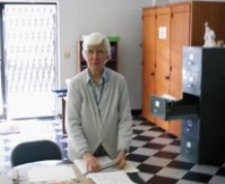
Here are the latest photos of our flower garden in progress. In the photo are Sr. Kathleen and SVDP students.
--Adrian

Saturday, May 16, 2009

GED Graduation Photos, Loyola University


Here are two snapshots I took at the GED ceremony today. Top photo, Rachel Nicolosi of the Literacy Alliance GNO speaking to the audience and graduates; bottom photo, GED graduates in caps and gowns. What a day it was !!
--Adrian

SVDP-ALC Graduates at the GED Ceremony at Loyola


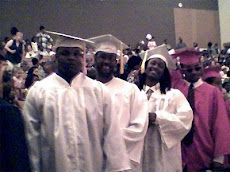
Here are some photos I took of our own SVDP-ALC graduates today. It was exciting to see our three SVDP-ALC GED graduates getting their diplomas today at Roussel Hall at Loyola University. The three were (in top photo, L to R) Terrell Brumfield, Lance Williams, and Jor'dan Watson. You can see them here in the white caps and gowns.
In the next photo you can see two of our grads with Sr. Lory.
It was a great day that represented a lot of hard work and study. Congratulations to our graduates from all of us at SVDP-ALC !
--Adrian

Our RB&W Photographer, Miriam McGinn: GED Graduation


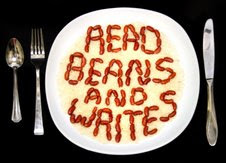
Here are a few photos I took of Miriam McGinn, the Photography and Art Editor for our new Literacy AmeriCorps student magazine called Read Beans and Writes (RB&W). Miriam came to SVDP-ALC a week ago and took some wonderful photos for RB&W including the fantastic pictures of the red beans logo and poster. She also took photos of the student posters for International Women's Day which we hope to use at a future event at Loyola.

But today the tables were turned as I got a few snapshots of Miriam herself as she practiced her art of photography. She was our Literacy AmeriCorps photographer at the Second Regional GED Graduation today held at Roussel Hall at Loyola Universiity.

GED graduates from around Greater New Orleans received their diplomas including four from our St. Vincent de Paul - ALC (see story above). Our thanks again to Miriam for visiting our school and taking all those great photos!
(See the photos Miriam took of our RB&W logo, Jennie's bean poster, and three of the International Women's Day posters, at left on this post. They look great!)
--Adrian

Wednesday, May 13, 2009

Student Writing: Carlen M. Foster

(Here is a very powerful and moving essay by a new student of ours at St. Vincent de Paul- ALC. Carlen discusses his earlier years, his struggles, and his redemption to a better way of life.
Adrian)

Knowing Jesus Christ
By Carlen M. Foster

Being raised by my grandmother, she tried her hardest to instill in me the importance of knowing Jesus Christ. I never understood why she would force me to join her church every Sunday morning. Also, I didn't believe that having a relationship with Jesus was as important as it is. As I grew older there were a number of situations that took place in my life which made me realize how wrong I was.

In October of 2007, I was indicted on a number of federal drug charges. I was facing up to five years in prison for these offenses. I began attending church every Sunday while out on bond. One year after being arrested, I joined the church I was attending and decided to be baptized again. I had received my date on which I was to be sentenced for the charges I was accused of. It just so happened to fall on my birthday. At that point, I began to pray and ask Jesus to bring me through my tough times and asked that I receive a sentence with no prison time included.

Well, my prayers were answered; and my faith grew stronger.

On December 14, 2008, I gave my life to Jesus. I was baptized and was determined to never lose sight of the One who was there for me when ever I called on Him. That very night I was involved in a home invasion in which my family and a close friend of mine life was in danger.
I called on Jesus and once again, He showed His power.

I have only Jesus to thank for not only myself still being alive today but also my family and close friend as well.

It took me a long time to know and understand why my grandmother would force me to church on Sunday as an adolescent, but I now have the answer and the understanding.

Wednesday, May 6, 2009

Green Jobs and Hazel's Blog


There is some really good information about Green Jobs on Hazel Parker's blog. Hazel has been the literacy education coach for Literacy AmeriCorps New Orleans this past year.
(See www.hazelsliteracylagniappe.blogspot.com/2009/04/literacy-lagniappe-tip-16-green-jobs.html)

Here is some of what Hazel said:
" I thought it would be appropriate to post some information about green jobs and adult learners. A few weeks ago, NIFL's Special Topics Discussion List addressed green jobs and basic skills. In response to a question about green jobs, the following resource was mentioned - Environmental Defense Fund's Green Jobs Guidebook, http://www.edf.org/article.cfm or http://www.greenforall.org/resources/green-jobs-guidebook. This guidebook provides the experience, training and skills needed for specific green jobs. Inform your learners about green jobs and let them know there are many possibilities for green collar jobs."

For more info on this and other literacy education topics, see Hazel's blog at www.hazelsliteracylagniappe.blogspot.com/

This information about Green Jobs should be helpful for our school now that Sr.Kathleen has begun the new project of growing a school garden.

(Note: The photo is of Hazel from her blog.)

Monday, May 4, 2009

Sr. Kathleen Grows a Garden at School


Sr. Kathleen is now growing a flower garden at school. Last week she brought in the large pot holden -- which is an old bath tub, but we don't call it that anymore -- and added some soil. Today she and two volunteer students planted some seeds and watered them down. You can see the packet of seeds in the photo. I think they are daisies; but I don't know much about flowers, so they could be cabbages or tulips for all I know.
I will, however, dutifully follow this story as our plants grow overtime; and I'll take photos. Yes, come watch the flowers grow, right here on this blog!
-- Adrian

Monday, April 27, 2009

200 Blog Posts, 5000 Hits, and a Strange Coincidence


We have reached another milestone on our blog. Last week we reached 5000 hits on our site. (We have a hit counter on the lower left-hand side of the blog which indicates everytime someone visits our site. This has happened 5000 times since we started back in February 2008.) Also, we reached the one year anniversary of our pen pal program with the US Antarctic Program (USAP) last week on April, 26. John Miller of the USAP continues to write to our school from Antarctica; and we write to him.

Finally, today we have reached the next milestone -- post number 200. I have written 200 posts (or stories) for this blog since we started. Some of these posts have student writings and some have guest-written articles.

Since this is a milestone, I have re-published here two posts -- one is the shortest post I have ever done for this blog and the other is the longest. The shortest is of our "Littlest Literacy AmeriCorps Volunteer," Gibson Fischer. The longest is of the "Socrates of Loyola University," Professor Fred Swaim.

It is fitting that these two people, who never had the chance to meet each other, should be side by side here because it is through this blog and Literacy AmeriCorps, SVDP-ALC, and Loyola that we discover by the oddest coincidence that they actually almost met each other (or had the chance to meet) ... and their relatives actually do know each other. This is one more strange coincidence I have encountered since Hurricane Katrina.

Here's how they are related: Gibson's mother, Sarah, is the program co-ordinator or director of Literacy AmeriCorps (LAC) New Orleans. It is through LAC that I am at SVDP-ALC teaching. Sarah's former Irish dance teacher, from years ago, is my sister MaryAnn McGrath Swaim. I played Irish music for Mary Ann's dance group. Mary Ann's husband is Fred Swaim, the "Socrates of Loyola." Fred passed six months after Hurricane Katrina from post-polio syndrome and contributing complications arising from evacuations from Katrina and later Hurricane Rita. Had he continued to teach at Loyola Law School (he taught Admiralty, Maritime Personal Injury, and Successions), he would have almost certainly met Sarah's husband, Owyn, who is finishing up his (Juris Doctor) law degree at Loyola now. Mary Ann and I also graduated from Loyola Law some years ago. And Sarah's office is at Loyola.

So, oddly enough, these two people -- Gibson and Fred -- have met, but only on this blog -- even though their families knew each other but did not realize it until I came to Literacy AmeriCorps and SVDP-ALC two years ago and created this blog.

So, if you are a follower of this blog, please take a look at these two stories below one more time with this new, coincidental perspective in mind.
I am re-printing the articles exactly as they appeared before -- our shortest story and our longest story.
It is a small post-Katrina world.
--Adrian

Thursday, April 9, 2009

Literacy AmeriCorps New Orleans Goes to Pittsburgh

Gibson


Gibson in action in Pittsburgh.
0 comments


Friday, September 19, 2008

Remember Katrina: Fred Swaim, The Socrates of Loyola University


(Below is another in our SVDP-ALC blog series on "Remember: Hurricane Katrina." As you recall this series was interrupted by the appearance of Hurricane Gustav near August 29th this year, Katrina's anniversary, and then again by Hurricane Ike. We will, however, continue with more Katrina stories and more Katrina people until our story is told.
-- Adrian)


"For sudden the worst turns the best to the brave."
From Prospice by Robert Browning

It was Ernest Shackleton who was fond of this quote (above) from Browning's poem about death and life and courage -- Prospice (pronounced from the Latin as pro-spee'--kay, meaning looking forward). Shackleton was a man who should feel right at home on this blog. He was the Anglo-Irish Antarctic explorer who tried to cross the frozen continent via the South Pole. He became shipwrecked with his crew when his famous ship, "The Endurance", got stuck in the ice at the Weddell Sea. "The Endurance" was finally crushed and sunk in the shifting ice of Antarctica. Shackleton, however, did not desert his crew or give up hope. He abandoned his original goal of being the first to transverse Antarctica via the Pole for a much higher purpose: to save the very lives of his crew and himself. He used Browning's poem and that very line (above) to inspire his crew and keep them alive. The "worst" situation had fallen to them. But "the best" would occur suddenly as they shifted their goals in life from vainglorious glory to sheer survival and self-sacrifice to save their own lives and the lives of each other in the crew. Shackleton did eventually save every man in his crew in an incredible adventure -- by sailing in nearly frozen seas with some of his crew in a wooden life boat to get help and return for the rest of his crew.

This amazing story of Antarctica, among other things, inspired me to begin our school's pen pal program with the the U.S. Antarctic Program (USAP). In addition to geography lessons and other studies for basic education, Antarctica teaches us about struggle, death, and life.

But to us who read this blog, Antarctica is also linked now --oddly enough --to New Orleans and thus to Hurricane Katrina. In an unpredictable and seemingly impossible way, a set of characters have crossed paths right here on our blog. Shackleton's struggle -- and the very name of his ship "The Endurance" -- is relevant to our story of Katrina. We have seen on our blog other Katrina people -- the students from the St. Vincent de Paul - ALC school and their pen pals who are members of the USAP stationed at McMurdo and the Amundsen-Scott South Pole Station. You, dear reader, have read about Miss Kitty, the post-Katrina cat, who was a good friend of mine during my own Katrina "displacement. (See the post on Aug. 2nd.) You read about hurricanes and rumors of hurricanes besides Katrina like Hurricane Rita and Hurricane Gustav which drove all the citizens of New Orleans into evacuation, once again, from their wounded and vulnerable city. And you read about Hurricane Ike which just missed us last week and hit Houston instead and destroyed much of Galveston.

Now you will meet another Katrina person -- who was (and still is in spirit) the most outrageous of them all. (See his photo above.) He was a lawyer, but he did not act like a lawyer. He was a law professor, but he did not act like a law professor. He was the author of a book on law, but he did not act like the author of a book on law. He had a law degree from Tulane and a masters degree in law from U.C. Berkeley, but he certainly did not act like he was from Berkeley. (He went to De la Salle too and spent his youth in MidCity, a true New Orleanian.)

How did he act, you may ask? Well, he took Shakespeare's advice: All the world was his stage. He acted like he was Jimmy Cagney. He acted like he was Marlon Brando in "The Wild Bunch" (Question: "What are you rebelling against?" Answer: "What have you got?") He acted like Peter Falk in Columbo, a program he once watched religiously. He rode a motorcycle at one point while teaching law at Loyola Law School in New Orleans despite the fact that he suffered most of his life from polio.

He had a fast wit and would take jabs at people, but it was just in fun. He once ran --or attempted to run -- an ill-fated campaign for governor of Louisiana. After watching countless re-runs of "Raiders of the Lost Ark," he came to believe that he was Indiana Jones. But as evidence that he was not totally delusional, he quite sanely called himself instead merely "Louisiana Swaim."

"Louisiana Swaim for Governor!" Yes, I can still recall the rallying cry. Alas, that was the campaigm that never materialized, although his law students were ready to carry on with the campaign. He taught law at Loyola Law School for about 30 years, from the early 1970's until the hedious days of Hurricane Katrina.

Despite his deteriorating health -- again due to post-polio syndrome-- he tried to continue to teach. He never claimed to be like Socrates -- that was not one of his Walter Mitty roles on his stage of life. But, yes, I think he was like Socrates. (The wise man knows how much he does not know and challenges those who think they know everything.) While your basic Corporations or Real Estate Law professor would be aghast to show up in class wearing the wrong color tie or an inappropriate business suit, Fred -- I mean Louisiana Swaim-- would wear a Hawaiian Luau shirt. He might show up in winter time wearing his motorcycle jacket, who knows? (Again... Q: "What are you rebelling against? A: What have you got.)

But it was not all craziness. No. Mainly I remember the books. Lots and lots and lots of books. He had accumulated, well, it must have been in the thousands. He read all the time. And not just things that he taught like law, which, of course, he read. But subjects of every type, it seemed. Books on philosophy. Books on drama and movies and psychology. Books on history, especially on World War 2. Books on science fiction. (We, of course, ofter discussed the "truth" behind the Roswell Incident, you know, where the flying saucers crashed landed in New Mexico in 1947? Yep, he knew "the truth" about UFOs too.) He read books about the Kennedy Assassination and even got an autographed copy of Jim Garrison's book on the subject -- which he subsequently gave to me.


Fred had one wife and three children, one sister, and parents who pasted away many years ago. (I remember Fred's father once told me that he, the father, once sat on the Outlaw Jessee James' knee once when he was a child. I wonder if that was true?) Fred had acquired polio in the 1950's in New Orleans during what was a period of epidemic. But instead of letting this destroy himself, he found other goals in life. So, rather than crossing Antarctica via the South Pole (or the New Orleans equivalent of this), he concentrated on saving the only life he had and the equivalent of the lives of his crew, which were the people who came into his life, his family, his friends, and his students -- or at least helping them as best he could. And throughtout his life he continued to read. Lots and lots and lots of books.

I still recall seeing his room at his parents' house many years ago. He had his large bookshelf right next to his bed where he could reach books right off the shelf from a proper lying/reading position. I realized then this was a brilliant idea, and I have always tried to duplicate this in my life (although in post-Katrina living it has been a challenge.)

He liked boiled crabs, New Orleans seafood, beer, and above all my sister's homecooking. (My sister Mary Ann and Fred were married more than 30 years ago at Holy Name Church at Loyola University).

He was at one point my Admiralty professor. He was my-brother-in-law. And he was my friend.

The Hell that was Hurricane Katrina -- the nightmare that was the evacuation from both that storm and also Hurricane Rita -- eventually was too much. (He and my sister had to evacuate twice -- from New Orleans to Lafayette for Katrina, then from Lafayette to Mississippi to stay at the home of the parents of my brother-in-law Chris. (Chris had helped our family multiple times during and since Katrina. He also has helped our SVDP-ALC school on many occasions behind the scenes. It was Chris and Marci, my sister, who "owned" Miss Kitty by the way, the Katrina Cat who is mentioned in another Katrina story on this blog. See Aug. 2nd post.)

It is very difficult to remember those days of Hurricane Katrina without breaking down. What words can we use to describe the whole ordeal? Nightmare? Horror? Unbelievable? I just don't know anymore. You tell me.

Fred -- his real name was Frederick, by the way, but I never called him that-- passed several months after my mother passed who also went through Hurricane Katrina. He did not go without a fight, however. He once loved to follow boxing, and even punched a punching bag as a youth -- despite having polio... or maybe because of it?


People might not always be able to overcome the insurmountable, but some people still try. I recall my sister Mary Ann discussing how they watched and enjoyed a film about FDR with Kenneth Branagh, the Irish actor who also played -- oddly enough-- Ernest Shackleton in a biographical film. Franklin D. Roosevelt, of course, was stricken with polio. We who do not have that illness, or a similar sickness, cannot really understand what it does to people both physically and psychologically. But it is amazing what some people can accomplish despite these afflictions.

Fred, who was once an English literature major, was fond of the poems of Dylan Thomas. I will not tell you when it was the last time Fred heard this poem read out loud; but I will tell you that it was after Hurricane Katrina, and it had a special importance.

So, I will repeat that poem below. Please read it. Perhaps it will have a special meaning for your own life or the life of a loved one some day.


"Do Not Go Gentle Into That Good Night"
By Dylan Thomas


Do not go gentle into that good night
Old age should burn and rave at close of day;
Rage, rage against the dying of the light.

Though wise men at their end know dark is right,
Because their words had forked no lightning
they do not go gentle into that good night.

Good men, the last wave by, crying how bright
Their frail deeds might have danced in a green bay
Rage, rage against the dying of the light.

Wild men who caught and sang the sun in flight
And learn, too late, they grieved it on its way
Do not go gentle into that good night.

Grave men, near death, who see with blinding sight
Blind eyes could blaze like meteors and be gay
Rage, rage against the dying of the light.

And you, my father, there on the sad height
Curse, bless me now with your fierce tears, I pray.
Do not go gentle into that good night.
Rage, rage against the dying of the light.


Fred did not go gentle into the night.
He was still outrageous and courageous to the end.
The worst turned the best to the brave.

And we will all meet again.
-- Adrian

1 comments

Sunday, April 26, 2009

Snowstorm at McMurdo -- John Miller's Photos from Antarctica


John Miller, our pen pal in Antarctica, just sent us these amazing photos from McMurdo, Antarctica right after a snow storm with 80 mph winds. The winds broke the windows of this small building and see what happened when the snow and extreme temperatures got in!
Life at McMurdo is no picnic. By the way, this week Jazz Fest starts in New Orleans. Maybe there should be a Jazz Fest at McMurdo too, but let's have it indoors. This could be a good way to escape the cold ... with hot Jazz!
--Adrian
Below is what John Miller wrote to us:
Here are a few pictures of what this place looks like after two weeks of snow falling and 80mph winds. All told we received around 6 feet of snow, although I have yet to figure out how the weather people actually come by that total because of the high winds. Some places are scoured clean, while others have 10 foot drifts.
One of the buildings had a couple of windows broken out from blowing debris and which allowed snow to fill up the room making for some very interesting photos. Visibility at times was worse than zero, and as you can see form the photo's of the bucket truck, not very good for most of the time. I wasn't working with the bucket truck at the time, but was outside quite a bit later on that night.

Take care and enjoy the sunshine you have,

John

Photos from the Pittsburgh Literacy Conference


Here are a few photos I took at the Pittsburgh Literacy AmeriCorps conference in early April in and around the city during our free time. (Except I did not take the one with me in it; Nick did.) Most of the time we were at seminars or at the service project at Highland Park, but I had some time on my own and took a few shots.
The top one is of nine from our group at the airport. Next is George Washington in his French and Indian War uniform. He was in a famous battle serving with British General Braddock near what became downtown Pittsburgh fighting the French and Indians. His experiences in that war helped him to beat the redcoats in the Revolutionary War. The other man in uniform is, of course, Franco Harris, running back for the Pittsburgh Steelers. These life-size statues are in the Pittsburgh airport.

The next photo looks like New Orleans; it is a riverboat on a river. But it is not a New Orleans boat and not the Mississippi River. It is a boat on the Monongahela River near our hotel.

The next fuzzy photo is of our group again at the airport ready to leave Pitttsburgh. We can even see half of Nick at the lefthand side, but Kim is missing in the photo, off to the right. The next photo is the little house at top of Mt. Washington where the gondola/incline goes. From that spot you can see the whole city. In the next photo the peach color building is our hotel on the Monongahela River. In the next photo are empty pizza boxes on the campus of the local University. We all had pizza after our service project in the snow at Highland Park. It was great! And don't worry, picked up after ourselves later and did not leave a mess.

The next two photos show some of Highland Park where we did our service project. As you can see, the hills are very steep. And there's lots of snow.

The last photo is where the Allegheney River meets the Monongahela, and they turn into the Ohio River which goes into the Mississippi and comes down to New Orleans. So, if we had a boat, we could get on it in Pittsburgh and wind up in the French Quarter in New Orleans. In the photo is also Heinz Stadium, which used to be Three Rivers Stadium.
-- Adrian