Sunday, January 11, 2009

RUBARB, Literacy*AmeriCorps at the Sankofa Market in the Lower Nine


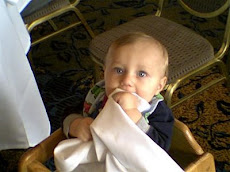
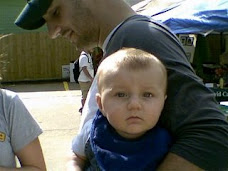
After touring the RUBARB "shop," our AmeriCorps group helped out at the Sankofa Market in the Lower 9th Ward. RUBARB showed children there how to do basic bike repairs. The photos also include our youngest volunteer member of Literacy*AmeriCorps, Gibson Fischer. At the wise old age of five months, he is helping Literacy*AmeriCorps "get things done!" Holding Gibson is his dad, Owyn. Gibson's mother, Sarah, just out of camera range in the photos, is the director of Literacy*AmeriCorps New Orleans.
--Adrian

Literacy*AmeriCorps Goes to RUBARB in the Lower 9th Ward


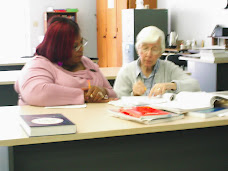
Our AmeriCorps group toured the shop and later on worked on repairing or "stripping down" some old bikes. ("Stripping a bike" means to take it apart piece by piece for spare parts.) We were joined by two staff volunteer personnel at RUBARB, Carl Prey who is originally from Canada and Lani Bemak who is from Massachusetts. Many volunteer staff members joined RUBARB after seeing the damage done to the 9th Ward from Katrina.
-- Adrian

More on RUBARB -- St. Mary of the Angels Catholic Church in the Lower 9


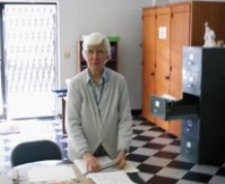
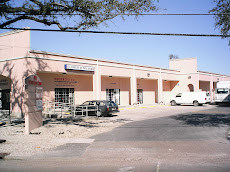
All of these photos, except one, are of St. Mary of the Angels Church Convent/Community Center in the 9th Ward. The shot of the tin shed is RUBARB, across the street from the Convent /Community Center and on the parking lot for the church itself. The school is nearby but still ruined from Katrina. Note the visible signs of Hurricane Katrina still on the convent walls -- the brown lines running horizontally are the water lines where the flood water settled, although it may have been even higher before settling. Also see the peculiar "X" or "O" mark on the wall. This is a Katrina rescue sign. Signs like these were spray painted on each and every house and building in New Orleans after Katrina by rescue crews. The signs are codes for the dates the buildings were searched, who searched them, and what the rescue crews found. Sometimes the crews found nothing or no one. Sometimes they found dead human bodies or dead pet animals. Almost always they found tremendous physical destruction. As you can see, New Orleans is a long way from full recovery since Katrina.
-- Adrian

RUBARB -- LiteracyAmeriCorps Helps Rebuild 9th Ward Bicycles


Our Literacy*AmeriCorps group helped out at RUBARB (Rusted up Bikes..) in the 9th Ward on Saturday, yesterday. Several of our members toured the bike "shop," participated at a neighborhood farmers' market in the Lower 9th Ward where RUBARB had a display, and then returned to the RUBARB shop to help repair some children's bikes.
RUBARB was created after Hurricane Katrina to help fix up bikes for adults and children that were ruined in the flood. It is not a "business" per se but a volunteer group that exists on donations and new volunteer work. The "shop" is in a tin shed located on the parking lot for St. Mary of the Angels Catholic Church in the 9th Ward. The convent and the school for St. Mary's were ruined in the flood, but the church is still operational. RUBARB provides a very needed service for the 9th Ward community that is still recovering from Hurricane Katrina. People donate spare parts or used or even partly ruined bikes, and RUBARB repairs them. Children can get a free bike by participating in "earn-a-bike", a program wherein they volunteer some time at the shop where they can also learn basic bike safety and bike repair skills. Bikes, repairs, and bike parts are also "for sale" for a small donation to the shop.
(The photos above include a "Christmas tree" made from used bike parts, some hand-painted signs, the outside of the shop, and some of our AmeriCorps members -- Lauren, Miriam, and Laura. For more information, visit http://www.rubarbike.org/
--Adrian

Thursday, January 8, 2009

Battle of New Orleans: Gen. Andrew Jackson Defeats the British


Today, January 8th, is the anniversary of the famous Battle of New Orleans. Back in 1815 General Andrew Jackson led a motley crew of US soldiers, Kentucky and Tennessee militia volunteers, Free Men of Color from New Orleans, Choctaw Indians, Creole gentlemen volunteers, and the legendary Baratarian pirates under Jean Lafitte, the buccaneer and privateer, to victory against a huge well-trained force of British Regulars.

The British army under Gen. Pakenham was soundly defeated about 4 miles below the old city of New Orleans (which was then really just the Vieux Carre' a.k.a. the French Quarter) in Chalmette. The British army had assembled from many stations world-wide to capture the key port of New Orleans in this famous War of 1812 battle.

Gen. Jackson wisely placed his army on the British path to the city between a cypress swamp and the Mississippi River denying the British room to maneuver. The redcoats launched a frontal assault on a foggy morning and were destroyed by musket and rifle fire and the deadly cannon fire precisely aimed by Lafitte's pirates. More fighting occurred accross the river on the West Bank; but with the British defeat in Chalmette, the Americans under Jackson won a stunning victory. (The artwork is from public domain from "commons wikipedia" depicting the battle at the American rampart in Chalmette.)

We discussed the battle today in our school and noted the contributions made also by the Ursuline nuns from New Orleans who in 1815 acted as nurses for the wounded American soldiers in the battle.

--Adrian

Wednesday, January 7, 2009

Antarctica Update: Discussing John Miller's Epic Letter


Over the holidays I received an extraordinary email from our USAP pen pal John Miller who is now back in the USA after many months at South Pole Station, Antarctica. (Read all about it on the Saturday, January 3, 2009 post below.) Sr. Lory and Sr. Kathleen were so moved by what John had to say that we decided to have a special class meeting to discuss his experiences in Antarctica, his philosophy, and what he said in his letter.
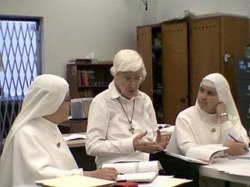
So, I printed out the blog post of Jan. 3 with John's email (again, see below), and our entire class read it aloud and then discussed it. This was one of the most moving classes we have ever had at our school. As you can see from the photos, I set up the world globe -- with Antarctica at the bottom- and a map. (This was the original National Geographic map of Antarctica that spurred our interest in the topic in the first place. Usually, I keep the map on the wall by my desk [visible in the corner] next to our Antarctica Bulletin Board which has photos that were sent to us from our USAP pen pals from McMurdo Station and South Pole. Only Antarctica photos have gone on the bulletin board except for the baby pictures of Gibson and the photo of Miss Kitty ... because Miss Kitty, of course, rules!)
John's discussion of his post-Antarctica adjustments to life in the USA fascinated us, but what he had to say about what he learned about " a strenuous life" and what he learned from the life and death of the Antarctic explorer Robert Falcon Scott simply blew us away! It was astonishing. The passages John chose to quote from Scott's diary were simple amazing and extraordinary. All of us were spellbound since this letter was coming from a man who actually had lived at the Pole himself. John finished his letter by encouraging the students to keep learning, as he said himself, "I am still learning."
We were fortunate indeed to have met all seven of our pen pals via email from McMurdo and South Pole Station. And we have all learned a great deal from them.
John was the first pen pal to write us, and he will continue to correspond with our school from his home in the USA as he adjusts to life post-Antarctica (as we continue to adjust to life post-Katrina).
We are all following his advice too -- as John said before: "Ancora imparo... I am still learning!"
The South Pole Rules!
--Adrian

Saturday, January 3, 2009

An Extraordinary Letter: John Miller's Return Home


(These photos come to us from the South Pole from our USAP pen pal John Miller. The oldtime photo is of Roald Amundsen and his crew in 1912 at South Pole. John Miller is at the Amundsen-Scott "exact replica tent" in the second photo; he stayed overnight in that tent once in October 2008. That is his footprint in "The Ice."


Below is one of the most extraordinary letters I have ever read in my life. I just got it tonight in New Orleans from a man who a few weeks ago finished living about a year at the South Pole in Antarctica -- at the US Amundsen-Scott South Pole Station. He is our SVDP-ALC school's pen pal John Miller. He talks about readjusting to life at home in Reno, Nevada with his wife, his children, and his pet dogs. But then he talks about Antarctica and what he learned there. It is absolutely stunning! His references to the early Antarctica explorers, Amundsen and Scott, are unforgettable. At the end of his letter, he addresses our students directly, as he has done many times before in his emails from South Pole. It is inspirational indeed. We were indeed privileged to have had John as our school's pen pal for so many months. But he is not going away! He will continue to write to our school about his life "on The Ice" and his new life back in the USA, and what he has learned from it all. Thanks again, John, for your outstanding commitment to education and living life to the fullest!
-- Adrian)


I'm sitting here at my computer, watching the snow pile up outside, and, of all things, wondering what the temperature is at the South Pole. After being home for all of three weeks, the year I spent at the Pole is taking on dream like qualities, even though parts of me are still adjusting to life once again in the northern hemisphere. Driving is still a pain (I'll take a snow mobile or LMC over a car any day of the week), TV seems worse now than when I left, and jobs are like hens teeth, only the hen has more.

It seems to be snowing harder now. Strange, these are the first snowflakes I have seen in more than a year. It's too cold to snow at the Pole. Ice crystals yes, snowflakes, no.
And as cold as the South Pole is, you don't get wet while walking around in the snow and track in mud after the snow melts (obviously the snow at the pole will not melt and any mud there is buried under more than 9000' of ice). The temperature at this moment is about 12 degrees Fahrenheit, and yet still seems comfortable to me when I am outside.

We actually had a white Christmas this year after about three inches fell Christmas day adding to the inch or so we had on the ground already. Even in Reno this happens only about once every 10 years or so.

This Christmas I once again enjoyed the opportunity of reading "How the Grinch Stole Christmas" to kids of all ages at some of our local schools. Last year I was able to read the story to a room full of adults at the Pole, and I think they enjoyed it more than the kids!

Right now I'm trying to deal with returning to a normal life, in a normal place, and finding a normal job, right here in Reno. I've had a taste of adventure and it's hard to ignore the cravings of life without boundaries.

I can't help but think of the ease of our life here in America, or the South Pole, when compared to what Amundsen and Scott experienced on their trek to the Pole. My night in the tent was, well, very un-dramatic, un-romantic, and un-comfortable, especially when I discovered that I had forgotten to put my boots in my sleeping bag with me. I found out just how stiff boots can become when the temperature is -51. For me, this was nothing more than an inconvenience, and a fast walk back to a warm station. For either Amundsen or Scott, a small mistake could have meant the difference between life and death. Even so, Robert Falcon Scott died just 11 miles from food and shelter. In his journal Scott wrote "Great God! This is an awful place, and terrible enough for us to have laboured to it without the reward of priority". In his last entry he said: "It seems a pity, but I do not think that I can write more. R. Scott. For God's sake look after our people". On another page he scribbled, "Send this diary to my widow".

But he did write more. During his last moments, he found the strength to write twelve letters to friends and family. One he wrote to his wife Kathleen; and speaking of his son he said..."I had looked forward to helping you to bring him up, but it is a satisfaction to know that he will be safe with you...Make the boy interested in natural history if you can. It is better than games. They encourage it in some schools. I know you will keep him in the open air. Try to make him believe in a God, it is comforting...and guard him against indolence. Make him a strenuous man. I had to force myself into being strenuous, as you know--had always an inclination to be idle." Also, "I wasn't a very good husband but I hope I shall be a good memory...The inevitable must be faced, you urged me to be the leader of this party, and I know you felt it would be dangerous. I have taken my place throughout, haven't I?...What lots and lots I could tell you of this journey. How much better it has been than lounging about in too great comfort at home".

It is amazing to me that during his last moments, and facing death, Scott used what strength he had to write those letters. Instead of accepting the inevitable, he poured out his heart on paper, and left us all an example of living life to the fullest. Robert Falcon Scott believed in God, education, hard work, family, even if they were thousands of miles apart, and taking risks; forgoing the comforts of home, he died for what he believed. And I think we all are more like Scott than we can imagine; having to force ourselves into being "strenuous" whether towards work, learning, or family; knowing that life lived outside of the norm can be very rewarding; for some even better than "lounging about in too great comfort at home".

Robert Falcon Scott was an inspiration to me and I hope, in some small way, that I have inspired others. Being an ordinary person leading an ordinary life is probably the most difficult thing a person can accomplish.

Everyone of you is an example to me. I admire and respect you for your hard work, for overcoming tremendous odds, for what you have accomplished, and for what, one day, you will accomplish! Keep on dreaming, working hard, and learning!

Remember, "Ancora imparo"... I am still learning!

John

(Thanks again, John! John Miller was a member of the United States Antarctic Program as a "winter-over" during 2008. He has been our outstanding pen pal from The Ice since the Spring of 2008, and he was the first peson to contact our school directly from Antarctica. "Winter-overs" are USAP personnel who stay at the Pole during the Antarctic Winter when darkness reigns, the sun never rises, and temperatures can reach nearly -100 F. John and four other courageous Americans -- Leah Webster, Weeks Heist, Jason McDonald, and Calee Allen -- were our South Pole pen pals during the past Antarctic winter. Shandra Cordovano and Lisa Welfare were our pen pals at McMurdo Station. Thank you all for the extraordinary work you did and the help you gave to our school.
McMurdo is magnificant! The South Pole rules!!
--Adrian)

Friday, January 2, 2009

Going Home: "Leaving The Ice"


A USAP member watches from the tower at Amundsen-Scott South Pole Station as an aircraft arrives to take some USAP members to McMurdo Station from where they will go to New Zealand then back to the USA. After about nine months, the "winter-overs" have finally "left The Ice." This photo was sent to us some weeks ago by our pen pal John Miller, USAP. Most "winter-overs" began leaving South Pole in November, 2008.
--Adrian

Leaving "The Ice"


(Above are photos from John Miller, USAP of his final days at South Pole Station. John will still stay in touch with our school post-Antarctica from his home in the USA.)
Most of our pen pals from the USAP, who were "winter-overs", have recently departed Antarctica. They call it "leaving The Ice." During the past Antarctic "winter" (which is spring and summer in our hemisphere), we were in contact with two pen pals at McMurdo Station and five at the Amundsen-Scott South Pole Station. They have all gone from Antarctica now, but we still have Antarctic pen pals. John Miller, our wonderful pen pal from South Pole, will remain in contact with our school as he returns home to post-Antarctic life in the USA. He has, as one of his many lifetime goals, the desire to become a teacher. So, he is right at home corresponding with us.
And we would like to officially welcome to our readers a new pen pal with whom we have been in contact with for several weeks. Her name is Sarah Krall, USAP; she lives and works at McMurdo Station in Antarctica. Welcome aboard to SVDP-ALC, Sarah!!
-- Adrian

Tuesday, December 30, 2008

Top Blog Photos of 2008, part 10 of 10


So ends 2008. See our top 50 blog photos here and below, plus a list of some of our top stories for 2008.
The photos and stories are not in any particular order. All of the photos and stories are our favorite.
Happy New Year 2009 !
Thanks everyone for following our SVDP-ALC Blog!
--Adrian


Top Blog Photos of 2008, Part 9


Top Blog Photos of 2008, Part 8


Blog photos on various topics, 2008.

Top Blog Photos for 2008, Part 7


Photos of various topics from our blog 2008.