Tuesday, December 30, 2008

Top Blog Photos 2008, Part 6


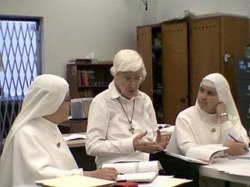
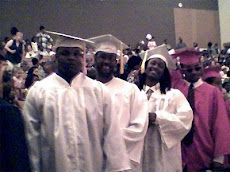
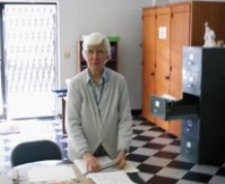
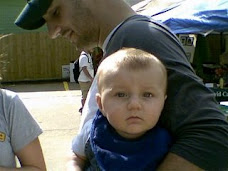
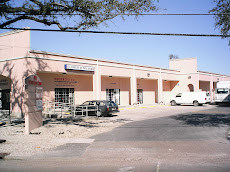
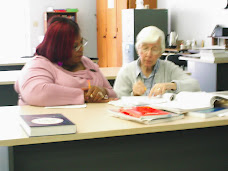
All photos are from New Orleans, even the snow ones.
--Adrian

Top Blog Photos 2008, Part 5


All these photos are from New Orleans.

-- Adrian


Top Blog Photos in 2008, Part 4


These photos are all from New Orleans with either SVDP-ALC or AmeriCorps
activities.
--Adrian

Top Blog Photos of 2008, Part 3


These photos are from SVDP-ALC school in 2008.
--Adrian


Top Blog Photos of 2008, Part 2


These photos are from our USAP pen pals at McMurdo Station and South Pole Station, Antarctica in 2008.
-- Adrian

Top Blog Photos of 2008


These photos were sent to us via email directly from our USAP pen pals
at Amundsen-Scott South Pole Station, Antarctica
in 2008.
--Adrian

Monday, December 29, 2008

Top Blog Stories of 2008

(A photo of our blog while online.)


With only a couple of days left in 2008, the SVDP-ALC blog will now look back at what we have done in 2008. We have over 120 posts on our blog and have covered many important events in literacy education and in the post-Katrina recovery of New Orleans. I will not, as some other news sources do, list our "top 10" stories because I think ALL of the stories on this blog are worth reading and important. But what follows is a list, in no partiucular order, of some of the significant things we covered since we first went online 10 months ago back in February 2008. Later on, before 2009 arrives, I hope to re-post some of the best photos from 2008 which appeared on our blog and maybe a few extra photos from 2008 that did not make it on the blog before.

Thanks to everyone who has been following the blog! (We now have over 2400 hits!) See you all in 2009, right here, at http://www.svdpalc.blogspot.com/

12/21/08 Winter Awards; 12/16 Sr. Silvia's "Rights of the Sick" essay; 12/14 Snow in New Orleans; 11/30 D-Day Museum Field Trip; 11/24 Tom Piazza Visits SVDP-ALC; 11/23 RampART Fest with LAC; 11/15 "City of Refuge" and Teacher/Tutor Guide; 11/12 Jennie Gorden Student Essay on "City of Refuge"; 11/10 Our GED Grad Jor'dan Watson (also Lance Williams on 11/17); 11/3 Our 100th Post to the Blog; 10/30 John Miller Writing Contest; 10/20 Email from Tom Piazza to our Blog; 10/19 John Miller stays in Tent at Amundsen-Scott South Pole Station; 10/15 Small Group Studies City of Refuge; 10/4 Remember Katrina, Lakeview Floods; 10/1 Kathy Dunlap, MD Volunteers; 9/19 Fred Swaim, the Socrates of Loyola; 9/12 Hurricane Ike; 9/9 Hurricane Katrina Memorial; 9/6 Hurricane Gustav in Baton Rouge (and our evacuation); 8/29 Remember Hurricane Katrina; 8/24 Finished Year One of AmeriCorps and SVDP-ALC with Certificates; 8/17 Sunset at South Pole Station Weeks Heist; 8/10 The Baby Has Arrived "Story of the Year"-- Gibson, Sarah, Owyn; 8/3 Guest Writer Robert Burch, PhD on Science; 8/2 Miss Kitty; 7/26 "Remember Katrina" Began; 7/21 Jason McDonald on the Ice at South Pole; 7/20 Miss Doretha's Gumbo; 7/19 Sharon Kenney Studies WW2 (Dr. Burch's WW2 book); 7/19 Shandra Cordovano at McMurdo; 7/17 Sr. Kathleen Joins SVDP-ALC; 7/15 Jennie Gorden Has Article accepted by Change Agent Magazine; 7/13 Oiling Eggs; 7/8 John Miller First Contact at Antarctica; 7/5 Leah Webster's Cake from South Pole; 7/1 South Pole Station; 7/10 Map of Antarctica; 5/12 Student Writing "Why People Overeat"; 5/1 Antarctica New Orleans Writing Project (first announced); 4/2 Student Wanda Miskell "New Orleans Parading" (first student essay on blog); 3/14 St. Patrick's Day Poem Innisfree by Yates; 2/22 Learning From Maps; 2/6 Welcome to our Blog! (Sr. Lory and Adrian start the blog)

The other two big stories were, of course, about the "Antarctic Sun" and the "Change Agent" magazines. We had both student and teacher articles accepted for publication in "Change Agent" magazine www.nelrc.org/changeagent , and the online magazine for the USAP/National Science Foundation called the "Antarctic Sun" http://antarcticsun.usap.gov/features/contentHandler.cfm?id=1500 did an article about our pen pal program. That was really exciting and wonderful news.

Yes, quite a lot of stories; and they were but a few of the many.
-- Adrian

Thursday, December 25, 2008

Christmas 1944, Bastogne and SVDPALC


The photographs tell a story that reaches back over 60 years. The little town in the first photo is Bastogne in Belgium. On December 16, 1944 Adolf Hitler personally planned and ordered a surprise winter offensive against the thinly-held American line near the Ardennes Forest near the German border. His plan was to divide the British and American armies in a Blitzkrieg attack and capture the vital supply port of Antwerp. This, he hoped, would repeat Dunkirk, an evacuation with massive Allied retreats and confusion. Thus Hitler would get the time he needed to build "super weapons" (jets, rockets, even atomic weapons) with the help of his Nazi scientists and win the war. Furthermore, if he forced the Western Allies to a truce, he could then transfer many German troops to the Eastern Front to stop the Russians.
The key to the entire battle, it later turned out, was the small town of Bastogne because it was the hub for most of the key roadways in that densely wooded forest. German tanks, halftracks, and trucks needed those roads as time and weather were major factors. (The Germans needed fog and snow to stop Allied airpower.) If the Americans who were at Bastogne could hold out, the entire Nazi plan could be disrupted.
In Bastogne was the man in the photo wearing the helmet. He was General Anthony McAuliffe of the US 101st Airborne Division (Screaming Eagles). The 101st arrived in Bastogne by trucks becasue the weather was too bad to air drop. They were surrounded by a much larger German army which demanded that the Americans surrender. To this official demand from the German Army commander, Gen. McAuliffe replied with one single word -- "Nuts!" (This was an emphatic "no!") The Americans held out in Bastogne and many places elsewhere in the much larger area nearby that came to take the shape of a bulge in the battlelines -- hence it was called the "Battle of the Bulge." The Americans in Bastogne spent Christmas Day 1944 surrounded by the German army and under constant attack.
On December 26 the first US troops sent to rescue the trapped Americans at Bastogne began to arrive. They were led by Gen. George Patton. Helping to supply Patton's army and other US troops at the Bulge was the man in the third, present-day photo standing in front of St. Vincent de Paul by our GED sign. His name is Mr. Lawrence Keller. During the Battle of the Bulge he and other US troops organized and delivered supplies to American soldiers so they could survive and fight; he was a corporal in the US Army. Mr. Keller's main base was in Metz, France south of Bastogne. Mr. Keller is a retired deacon in the Catholic Church and is the father-in-law of Deacon Rudy of the SVDP Society. He helps out at SVDP today at the very young age of 86 in many ways including as a resident carpenter.
In fact, it is a strange reality that the man who fixed the leg on one of our school's desks and made our wooden doorstop, once helped stop Adolf Hitler and the Nazis in December 1944.
Mr. Keller will be a guest speaker about WW2 history at our school in January when classes resume. Our school recently had a field trip to the D-Day Museum/National World War ll Museum and is studying World War 2. (Note: The two WW2 photos are from the internet and in public domain.)
-- Adrian

Tuesday, December 23, 2008

Peace and Goodwill


MERRY CHRISTMAS,
HAPPY HOLIDAYS,
AND
HAPPY NEW YEAR !!

Sunday, December 21, 2008

Winter Awards Celebration at SVDP-ALC


Usually twice per year we have a student awards event at our school. Last Thursday we had the Winter Awards. Several students received certificates and awards for academic accomplishments from improvements in class work to special awards for writing essays or history research projects. Sr. Kathleen and Sr. Lory made this a special day for SVDP-ALC as it was the last day of the year 2008 for us as well. So, we had a party too, complete with homemade brownies and pralines, various cookies, cakes, milk, and soft drinks. (Sr. Kathleen made the great pralines and cookies!)

In the photos we can also see Terrell receiving an award for academic improvement, Dwana receiving an award for her history research project based on our trip to the National WW2 Museum (D-Day Museum), and Sr. Silvia getting an award for her essay writing, some of which appears on this blog and in the newsletter AmeriWord at http://www.literacygno.org/. Jennie also received an award for her essay contribution to the Change Agent magazine, and Edward received an award for academic improvement.
Congratulations to all !
-- Adrian

Tuesday, December 16, 2008

Student Writing -- Sr. Silvia and the Rights of the Sick


(Below is student writing by Sr. Silvia, a nun from Mexico studying the English language at our school. She is a member of a religious order of nurses, the Sisters of the Servants of Mary. The photo is of Sr. Silvia at our school.
-- Adrian)
Rights of the Sick Person
By Sr. Silvia Rodriguez

My name is Sr. Silvia Rodriguez. I am a sister from the Sisters Servants of Mary. My ministry is to take care of sick persons in their own homes in New Orleans. Most of the people still suffer from Hurricane Katrina and the loss of their homes. I’m doing this for about two years now. I am a student from Mexico, and I learn English at the St. Vincent de Paul-Adult Learning Center in New Orleans. In my experience in this mission, I have found that every person has to be helped in every aspect of life!


To achieve this we need to attend five rights related to all dimensions of life: physical, psychical, intellectual, social, and spiritual. When the person gets sick, the first need that we have to look to is his physical right that means to take care of his body, to provide comfort, cleanliness, and relief from his suffering with proper medication.The second is the psychical right that we honor by attending to his needs. These include his need to express his own feelings, his need to share in confidence his anguish and fears, his need to be understood through companionship.The third is the intellectual right; on this dimension, we find that he needs to be informed about his illness, also he needs to know how serious it is or if he has the prospect to be cured.The sick person has also a social right. This means that he never has to stop being part of the family’s decisions, and to assist, if it is possible with reunions, meetings, celebrations, etc.And finally, but not least, the sick has spiritual rights. He needs to practice his faith, to receive spiritual support in order to find meaning in suffering. Also, he needs to have some moments of silence for prayer.To have respect for the rights of the sick, we can help them to feel confident, to confront their inevitable situation.


To me it is a privilege to be part of these sacred moments when my brothers and sisters are cross because these moments are very difficult for them and their families. From these moments, my life becomes very blessed and every day I give thanks to God for the gift of my mission.

SVDP-ALC Remembers The Battle of the Bulge


This map (which is a US Army map in public domain from the internet) shows the German army's plan of attack in the Battle of the Bulge which began on 16 December 1944. The Germans called the plan Wacht Am Rhein -- Watch on the Rhine.
We discussed this important event in class today since we are studying World War 2. (We had a field trip to the D-Day Museum a few weeks ago.)
Adolf Hitler ordered this final offensive in the days before Christmas 1944 to divide the American and British armies, capture the key supply port of Antwerp, and buy time for his Third Reich. In his insane mind, he hoped his scientists could use the time to build super weapons -- including the Atomic bomb -- and win the war. In the alternative, he hoped to force the Western Allies to sue for peace, then turn the bulk of his German army against the Russians to the east.
Although the attack worked at first, the Americans held their ground, with the famous 101st Airborne Division, at crucial crossroads town of Bastogne in Belgium. The small town was surrounded by several German units including panzers (tanks) and the Nazis orderd the Americans to surrender. The American commander, Gen. Anthony McAuliffe, replied with a single word: "Nuts!" This was to become one of the most famous lines in all of American military history. (Gen. McAuliffe's response was strongly defiant. He would never surrender.)

Gen. George Patton and his US 3rd Army finally relieved besieged Bastogne, and the Nazi army was slowly driven back to Germany. Within six months the war in Europe would be over and Hitler would be dead.
We discussed much of this in our class today and the significance of today's date -- 16 December 1944. Along with June 6th, 1944 and December 7th, 1941, this is one of the most significant dates in American -- and world-- history.
-- Adrian

Sunday, December 14, 2008

"Snow" Geese on Bayou St. John


The geese on Bayou St. John were quite upset that their usually warm waterway was covered with snow last Thursday. You can bet they had never seen SNOW before. Fortunately for our feathered friends, snow does not last very long in New Orleans.
-- Adrian

Sr. Kathleen Builds a Snowman


Sr. Kathleen built a Snowman on the roof of her car. It was wonderful, but he could only stay for a few hours.
Snow doesn't last very long in New Orleans...
-- Adrian

Let It Snow, Let It Snow, Let It Snow...


As incredible as it may seem, these are photos from our school in Gentilly in New Orleans with SNOW!!


It actually was snowing -- real snow-- for a few hours in the morning last Thursday. Here are a few shots of Sr. Lory and me, Sr. Kathleen and her Snowman, and students throwing snow balls. Wow!

-- Adrian